


Guides
Ruger 10/22 Charger Suppressed Build Guide

The cleanest way to build a suppressed Ruger 10/22 Charger is to replace the factory barrel with an integrally suppressed one, not to hang a can off the muzzle.
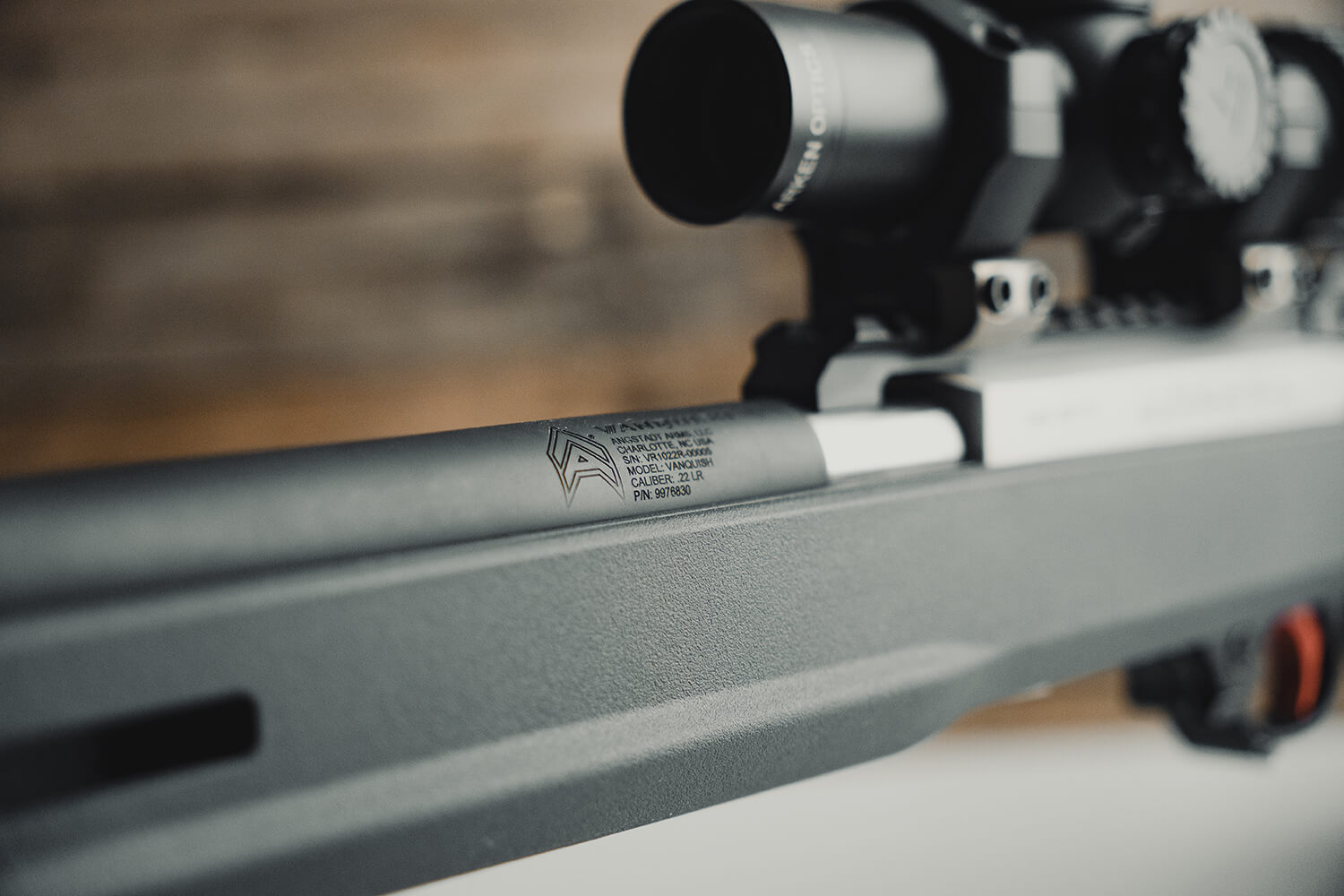
The Vanquish 22 is a 12 inch drop in barrel that ports gas along its length, dropping standard velocity .22LR to subsonic speeds so the whole package is quiet without a can dangling off the front.
On a compact pistol like the Charger, that build keeps the gun short, balanced, and simple.
Why build the Charger with an integral barrel instead of a muzzle can?
A Charger is a pistol built to be short and handy. Thread a standalone can onto a threaded barrel and you add length and weight right where the gun is trying to stay compact.
An integral barrel puts the suppressor around the barrel instead of past it, so the Charger keeps its balance and does not grow six inches at the muzzle. You also file one transfer for one NFA item, the barrel itself, instead of buying a separate can.
What is the Vanquish 22 Charger barrel?
It is a 12 inch integrally suppressed barrel that drops into the Ruger 10/22 Charger in place of the factory barrel. The barrel is precision ported so that gas bleeds off as the bullet travels, which slows standard velocity ammo below the speed of sound.
That means it quiets both the muzzle blast and the sonic crack, and it does it on standard ammo you can buy anywhere, with no special subsonic loads required. The physics behind porting a barrel to go subsonic is in our explainer on how suppressors work.
Vanquish 22 Charger barrel specs
| Spec | Detail |
|---|---|
| Platform | Ruger 10/22 Charger |
| Barrel | 12 inch precision ported, 416R stainless |
| Contour | 0.920 inch bull |
| Chamber | Bentz match chamber |
| Rifling | Button rifled, 1 in 16 twist |
| Shroud | 6061 aluminum, Cerakote finish |
| Weight | 14.7 oz |
| Design | Baffleless, no baffle strikes |
What do you need for the build?
Less than you would think. The barrel is the hard part, and it is drop in.
| Component | Notes |
|---|---|
| Host | Ruger 10/22 Charger pistol |
| Barrel | Vanquish 22 integral suppressed barrel, the NFA item you register |
| Chassis or brace | A Charger chassis with a pistol brace for support and optics rail |
| Optic | A red dot or low power scope, since a quiet plinker rewards fast follow ups |
| Ammo | Standard velocity or subsonic .22LR, not hyper velocity |
How hard is the barrel swap?
It is a standard 10/22 barrel change. You loosen the V block, pull the factory barrel, drop in the Vanquish, and torque it back down. No gunsmithing, no threading, no timing a can.
One note: some aftermarket receivers, such as certain Tactical Solutions models, use a tighter barrel inlet than Ruger factory spec and may need a little hand fitting. The same swap logic applies to any 10/22, covered in our guide to the best Ruger 10/22 barrel upgrades.
Ruger 10/22 Charger Barrel Installation
Watch this video for step by step instructions on how to remove and replace the factory Ruger 10/22 barrel. Note: the charger barrel is the same as the full size 10/22 barrel. They only differ in length.
What ammo should you run in the Charger build?
Standard velocity or subsonic .22LR is the sweet spot, because the barrel already pulls standard loads subsonic and that is where it sounds best. Avoid hyper velocity rounds like CCI Stinger, which use a longer case that does not fit the Bentz match chamber.
If you want a hotter round, CCI Velocitor uses a standard length case, though you are shooting suppressed, so there is little reason to break the sound barrier on purpose. Full ammo detail is in our guide to the best subsonic 22LR ammo.
Is the suppressed Charger an SBR?
Not as a braced pistol. The Charger is a pistol, and the integral barrel is registered as a suppressor, so a Charger with a pistol brace is a pistol with a suppressor, one NFA item. Add a shoulder stock and you have made a short barreled rifle, which is a separate NFA item and a separate registration.
Most Charger builds stay as braced pistols to keep it to a single stamp. For the trust or individual decision on that stamp, see our guide to NFA trust vs individual.


Why the baffleless design matters on a Charger
The Vanquish 22 runs no baffles. It quiets the shot with expansion volume instead of a stack of baffles, so there is nothing to erode, clog, or strike.
On a .22, which is a filthy round that cakes everything in lead, that means cleaning is a soak rather than a scrub, and there is zero risk of a baffle strike knocking your point of impact off.
The integral approach across the 10/22 family is covered in our integrally suppressed 10/22 guide.
Build it quiet from the barrel out
The Vanquish 22 Charger barrel is a 12 inch integrally suppressed drop in for the Ruger 10/22 Charger at $535, and it is the core of the whole build.
Frequently asked questions
The cleanest build replaces the factory Charger barrel with an integrally suppressed barrel like the Vanquish 22. It is a drop in swap using the standard 10/22 V block, and the ported barrel drops standard velocity .22LR to subsonic speeds. Add a chassis and pistol brace and an optic, and you have a compact, quiet Charger with one NFA item to register.
No. The Vanquish 22 barrel is precision ported to drop standard velocity .22LR below the speed of sound, so ordinary ammo runs quiet. Avoid hyper velocity rounds like CCI Stinger, which do not fit the Bentz match chamber. Standard velocity and subsonic loads sound best.
Not as a braced pistol. The Charger is a pistol and the integral barrel is registered as a suppressor, so with a pistol brace it stays a pistol with a suppressor, a single NFA item. Adding a shoulder stock makes it a short barreled rifle, which is a separate NFA registration.
It is a standard 10/22 barrel swap with no gunsmithing. You loosen the V block, remove the factory barrel, drop in the Vanquish, and torque it down. Some aftermarket receivers with tighter than factory barrel inlets may need light hand fitting.
Featured Products
-
 Vanquish 22 Suppressed Ruger Charger Barrel
Original price was: $599.00.$535.00Current price is: $535.00.
Vanquish 22 Suppressed Ruger Charger Barrel
Original price was: $599.00.$535.00Current price is: $535.00.
Latest Intel
Suppressed Fest 2026: This Weekend!
Oct
How to Sell or Transfer a Suppressor in 2026
Oct
First Round Pop: What Causes It and How to Get Rid of It
Oct
ATF’s NFA Open Letter: Do Suppressors Still Need to Be Registered?
Oct
10/22 Takedown Suppressor: The Quiet Build That Packs Small
Oct
Top 7 Suppressor Myths, Debunked
Oct