


Educational
How Suppressors Work: The Physics of Sound Reduction

A suppressor works by giving the hot, high pressure gas behind the bullet room to expand, slow, and cool before it reaches open air. A gunshot is loud because that gas leaves the muzzle in a sudden, violent burst.
Slow the burst down and you quiet the shot. That is the whole principle, and everything inside a can serves it.
How does a suppressor actually reduce sound?
When a round fires, gas behind the bullet is at enormous pressure and temperature. Left alone it slams into the air at the muzzle all at once, which is the crack you hear. A traditional suppressor captures that gas in a series of chambers, lets it expand into the extra volume, and releases it more gradually.
Sound is a pressure wave, so a slower, cooler release of gas is a smaller wave and a quieter shot. How much quieter comes down to how that pressure is measured, which we cover in our guide to the quietest .22 suppressor.

What makes a gunshot loud in the first place?
Three separate sources, and a suppressor only addresses one of them fully. The muzzle blast is the gas burst a suppressor is designed to tame. The sonic crack is the small sonic boom of a supersonic bullet. The action noise is the mechanical clatter of the gun cycling.
A suppressor works on the muzzle blast. The other two are dependent on your ammunition choice and the gun itself.
| Noise source | What it is | Does a suppressor fix it? |
|---|---|---|
| Muzzle blast | Gas bursting from the muzzle at high pressure | Yes, this is exactly what a can targets |
| Sonic crack | The small sonic boom of a supersonic bullet | No, use subsonic ammo to remove it |
| Action noise | The mechanical cycling of the gun | No, it is inherent to the firearm |
What happens inside the suppressor?
The can is mostly empty space, divided into chambers by internal structure. As gas floods in behind the bullet, it expands into that volume, loses pressure, and cools against the metal. Each chamber bleeds off a little more energy before the gas ever reaches the exit.
More usable internal volume and smarter internal geometry mean more energy pulled out of the gas, which is why design matters as much as size.
Why does subsonic ammo matter so much?
A suppressor cannot quiet a bullet that breaks the sound barrier, because the sonic crack happens in the air downrange, not at the muzzle. Subsonic .22 LR stays under the speed of sound, so there is no crack for the can to fight.
Pair a good can with subsonic ammo and you remove two noise sources at once, the muzzle blast and the sonic crack. For the loads worth running, see our guide to the best subsonic 22LR ammo.
What is first round pop, and why does it happen?
The first shot from a cold can is often louder than the rest. Oxygen sits inside the suppressor between range trips, and on that first shot the hot gas ignites it, adding a small extra report. After that the oxygen is spent and the following shots are quieter.
Good internal design minimizes it, and both the Reticent 22 and the Vanquish 22 are built to eliminate it.
How does an integral suppressor change the physics?
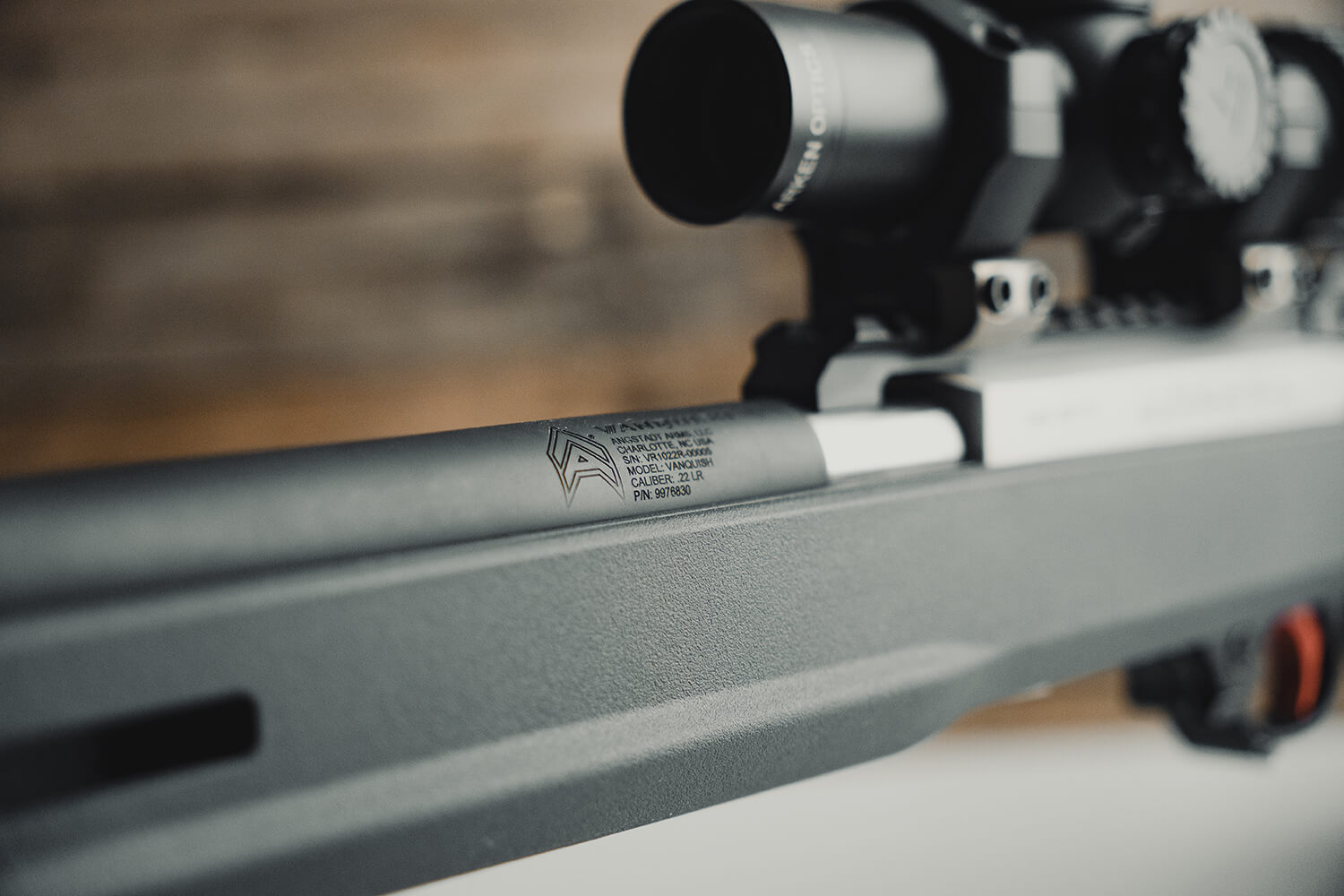
An integral design like the Vanquish 22 wraps the suppressor around the barrel instead of hanging it off the end, and vents gas through ports in the barrel itself. That bleeds pressure early and slows the bullet inside the system.
The result is that even standard velocity ammo can leave the muzzle subsonic, so the can quiets the blast and the barrel removes the crack. More on that build in our integrally suppressed 10/22 guide.
How does a baffleless suppressor work?
Most suppressors stack a row of baffles inside the tube to chop up the gas and force turbulence. The Vanquish 9 and Vanquish 22 use none. They run zero baffles and work purely on volume, giving the gas a large, open space to expand and cool before it exits.
No baffles means nothing to erode, clog, or realign, and the quieting comes from the expansion volume itself rather than a stack of parts.
Download the free guide now!
From choosing your first suppressor to taking it home, this guide walks you through everything. Don't be caught off guard, enter your email and we'll send it straight to your inbox!
Frequently asked questions
A suppressor captures the high pressure gas behind the bullet and lets it expand, slow, and cool inside a series of internal chambers before it reaches open air. A gunshot is loud because that gas leaves the muzzle all at once, so releasing it more gradually shrinks the pressure wave and quiets the shot.
No. A suppressor reduces the muzzle blast, but it cannot remove the sonic crack of a supersonic bullet or the mechanical noise of the action. Pairing a can with subsonic ammo gets you the quietest result, because it removes the crack as well as the blast.
Supersonic bullets create a small sonic boom in the air downrange that a suppressor cannot touch. Subsonic .22 LR stays below the speed of sound, so there is no crack to begin with, leaving only the muzzle blast for the can to handle.
First round pop is the slightly louder first shot from a cold suppressor. Oxygen inside the can ignites when the first hot gas enters, adding a small extra report, after which the following shots are quieter. Good internal design reduces it, and both the Reticent 22 and Vanquish 22 are built to eliminate it.


Featured Products
-
 Vanquish 22 Suppressed Ruger 10/22 Barrel
Original price was: $599.00.$535.00Current price is: $535.00.
Vanquish 22 Suppressed Ruger 10/22 Barrel
Original price was: $599.00.$535.00Current price is: $535.00. -
 Vanquish 22TD Suppressed Ruger 10/22 Takedown Barrel
Original price was: $599.00.$535.00Current price is: $535.00.
Vanquish 22TD Suppressed Ruger 10/22 Takedown Barrel
Original price was: $599.00.$535.00Current price is: $535.00. -
 Reticent 22 Suppressor
Original price was: $375.00.$345.00Current price is: $345.00.
Reticent 22 Suppressor
Original price was: $375.00.$345.00Current price is: $345.00. -
 Reticent 360S Suppressor
Original price was: $895.00.$795.00Current price is: $795.00.
Reticent 360S Suppressor
Original price was: $895.00.$795.00Current price is: $795.00.
Latest Intel
Who Can Use Your Suppressor? Rules for Family & Friends in 2026
Oct
Suppressed Fest 2026 Recap
Oct
Vanquish 22 M81 Woodland Limited Ed: Available Now
Oct
Is the Ruger Precision Rimfire Discontinued?
Oct
Suppressed Fest 2026: This Weekend!
Oct
How to Sell or Transfer a Suppressor in 2026
Oct