


Educational
Best Subsonic and Standard Velocity 22LR Ammo for Suppressed Shooting

For a suppressed .22, standard velocity ammo is the sweet spot. It stays subsonic, so there is no sonic crack for the can to fight, and it carries enough energy to cycle a semi auto like a 10/22.
Dedicated quiet loads are even softer but too weak to run most semi autos, and subsonic match is the pick when accuracy matters most. The can is only half the equation. Feed a rifle supersonic ammo and you will still hear a sharp crack downrange, no matter how good the suppressor is.
Why does subsonic ammo matter for a suppressor?
The speed of sound is roughly 1,125 feet per second. Any bullet that goes faster breaks the sound barrier and makes its own small sonic crack in flight, out past the muzzle where no suppressor can reach it.
Keep the bullet subsonic and there is no crack to suppress, so the can gets to show what it can really do. This is why ammo choice matters as much as the can itself.
What is the quietest 22LR ammo?
- Dedicated quiet loads. Rounds like CCI Quiet run very slow and very soft. They are the quietest thing you can feed a .22, but they are too weak to cycle most semi autos. Great in a bolt gun or single shot, less so in a 10/22.
- Standard velocity. Loads in the standard velocity class sit just under the speed of sound and carry enough energy to run a semi auto. This is the sweet spot for a suppressed 10/22: quiet, subsonic, and reliable.
- Subsonic match. Match subsonic lines are built for shot to shot consistency. They cost more, they run quiet, and they are what you want when accuracy matters as much as sound.
.22LR ammo for suppressed shooting, compared
Velocities below are approximate nominal figures by class. Your rifle and barrel length will shift them, so confirm over a chronograph before treating any load as subsonic.
| Ammo class | Example load | Approx. velocity | Subsonic | Cycles a semi auto | Best for |
|---|---|---|---|---|---|
| Dedicated quiet | CCI Quiet | ~710 fps | Yes | No | Bolt guns, single shots |
| Standard velocity | CCI Standard Velocity | ~1,070 fps | Yes | Yes | Suppressed 10/22 |
| Subsonic match | SK or Eley subsonic | ~1,050 fps | Yes | Usually | Accuracy plus quiet |
| High velocity | CCI Mini-Mag | ~1,235 fps | No | Yes | Not for quiet shooting |
Will quiet ammo cycle a semi auto?
A bolt gun does not care how soft the round is, so you can shoot the quietest ammo made. A semi auto needs enough energy to work the action, so the very quietest loads may short stroke.
If you run a 10/22 and want it to cycle, start with standard velocity rather than the ultra quiet stuff, then experiment from there.
How does the Vanquish 22 change your ammo choice?
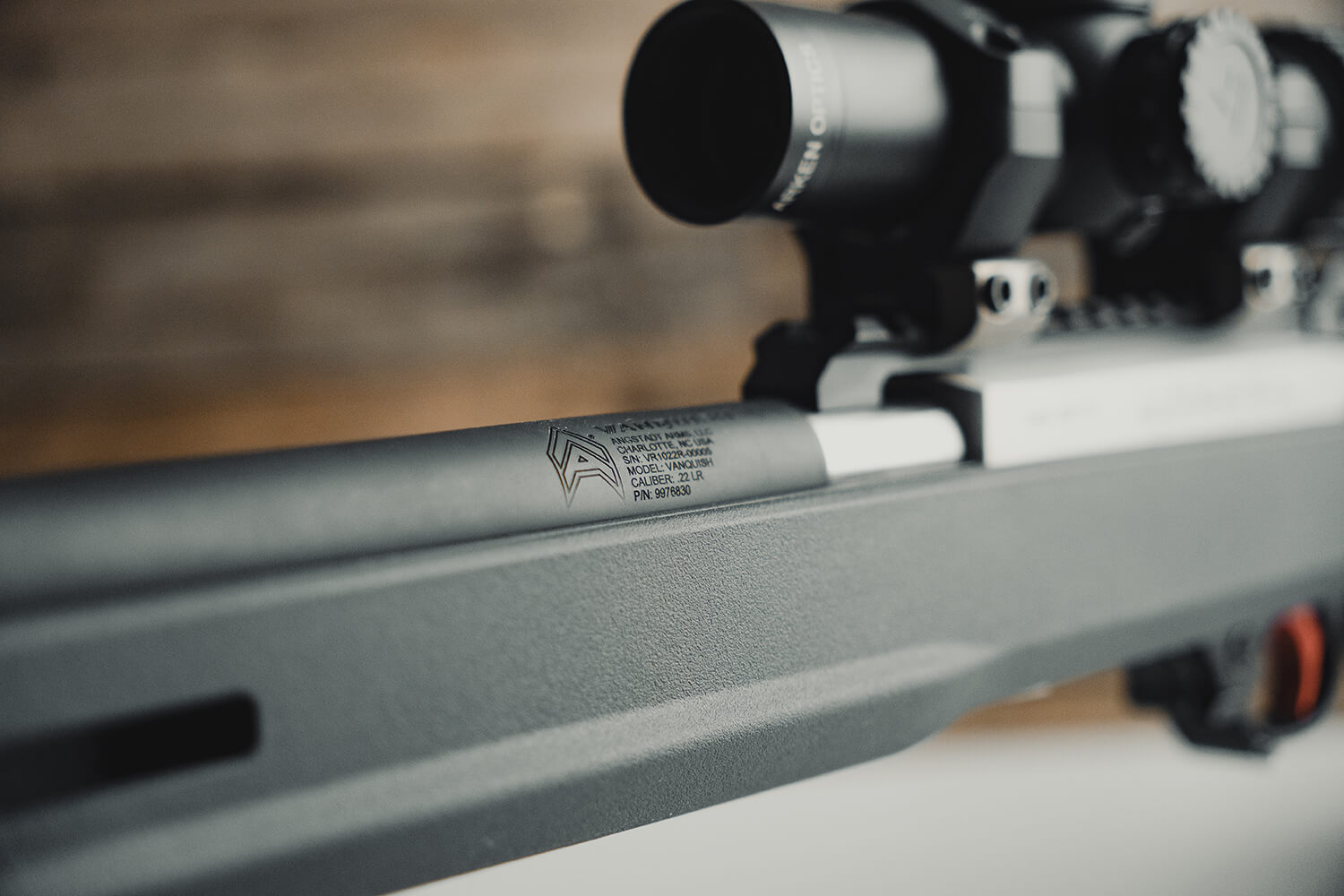
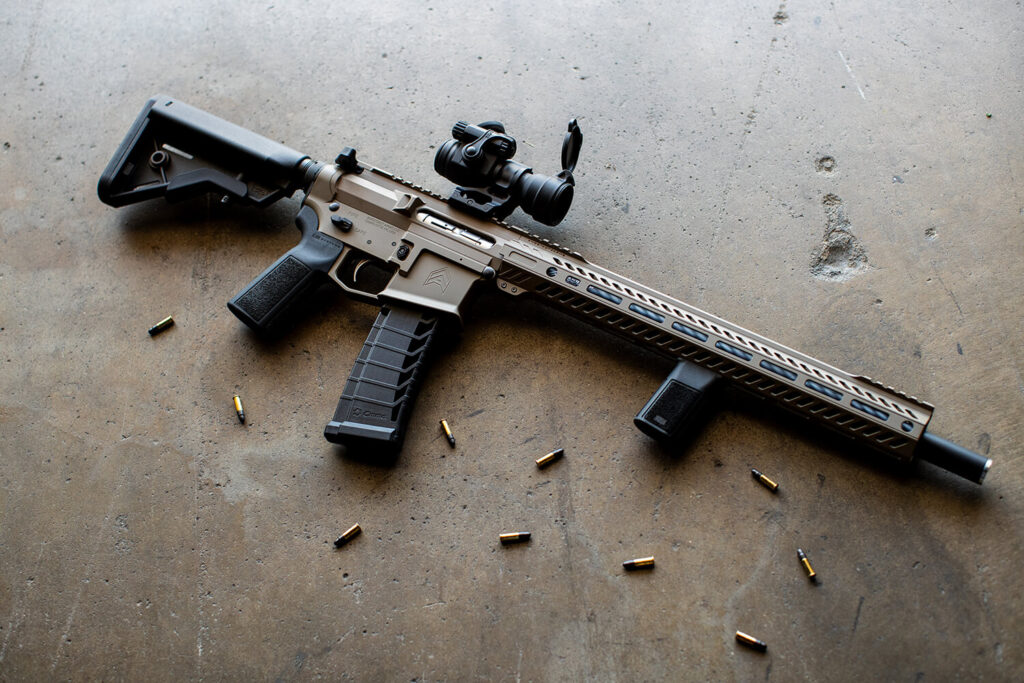
The Vanquish 22 is designed to bleed pressure through its ported, integrally suppressed barrel. In practice that pulls standard velocity ammo down toward subsonic behavior, so you get quiet performance from ammo that still cycles reliably.
You do not have to choose between soft and functional the way you do with a threaded can. That is part of what the integral design buys you.
A simple starting lineup
Every rifle has its own preferences. Buy a few boxes across the quiet and standard velocity classes, shoot them over a chronograph if you have one, and let the rifle tell you what it likes. Start with standard velocity for a semi auto and work outward from there.
Frequently asked questions
Standard velocity ammo is the best all round choice for a suppressed .22. It stays subsonic so the suppressor can do its job, and it carries enough energy to cycle a semi auto like a 10/22 reliably. Match subsonic is the upgrade when accuracy matters most.
Subsonic ammo lets the suppressor reach its full potential. Any bullet faster than about 1,125 fps breaks the sound barrier and makes a sonic crack no suppressor can quiet. Keep the bullet subsonic and there is no crack to suppress, so the can does all the work.
The quietest loads, like CCI Quiet, are too low powered to work the action of most semi autos, so they short stroke. A bolt gun cycles by hand and shoots them fine. For a semi auto like a 10/22, start with standard velocity instead.
The Vanquish 22 bleeds pressure through its ported integral barrel, which pulls standard velocity ammo toward subsonic behavior. That lets you run ammo that cycles reliably while still shooting quiet, so you are not forced to choose between soft and functional.
Featured Products
-
 Vanquish 22 Suppressed Ruger 10/22 Barrel
Original price was: $599.00.$535.00Current price is: $535.00.
Vanquish 22 Suppressed Ruger 10/22 Barrel
Original price was: $599.00.$535.00Current price is: $535.00. -
 Vanquish 22 Suppressed Ruger Charger Barrel
Original price was: $599.00.$535.00Current price is: $535.00.
Vanquish 22 Suppressed Ruger Charger Barrel
Original price was: $599.00.$535.00Current price is: $535.00. -
 Vanquish AR-22 Suppressed Barrel
Original price was: $599.00.$535.00Current price is: $535.00.
Vanquish AR-22 Suppressed Barrel
Original price was: $599.00.$535.00Current price is: $535.00. -
 Vanquish 22 Suppressed Ruger Precision Rimfire Barrel
Original price was: $599.00.$535.00Current price is: $535.00.
Vanquish 22 Suppressed Ruger Precision Rimfire Barrel
Original price was: $599.00.$535.00Current price is: $535.00. -
 Vanquish 22TD Suppressed Ruger 10/22 Takedown Barrel
Original price was: $599.00.$535.00Current price is: $535.00.
Vanquish 22TD Suppressed Ruger 10/22 Takedown Barrel
Original price was: $599.00.$535.00Current price is: $535.00. -
 Reticent 22 Suppressor
Original price was: $375.00.$345.00Current price is: $345.00.
Reticent 22 Suppressor
Original price was: $375.00.$345.00Current price is: $345.00.
Latest Intel
Suppressed Fest 2026: This Weekend!
Oct
How to Sell or Transfer a Suppressor in 2026
Oct
First Round Pop: What Causes It and How to Get Rid of It
Oct
ATF’s NFA Open Letter: Do Suppressors Still Need to Be Registered?
Oct
10/22 Takedown Suppressor: The Quiet Build That Packs Small
Oct
Top 7 Suppressor Myths, Debunked
Oct