


Educational
Direct Thread vs QD for a Rimfire Suppressor
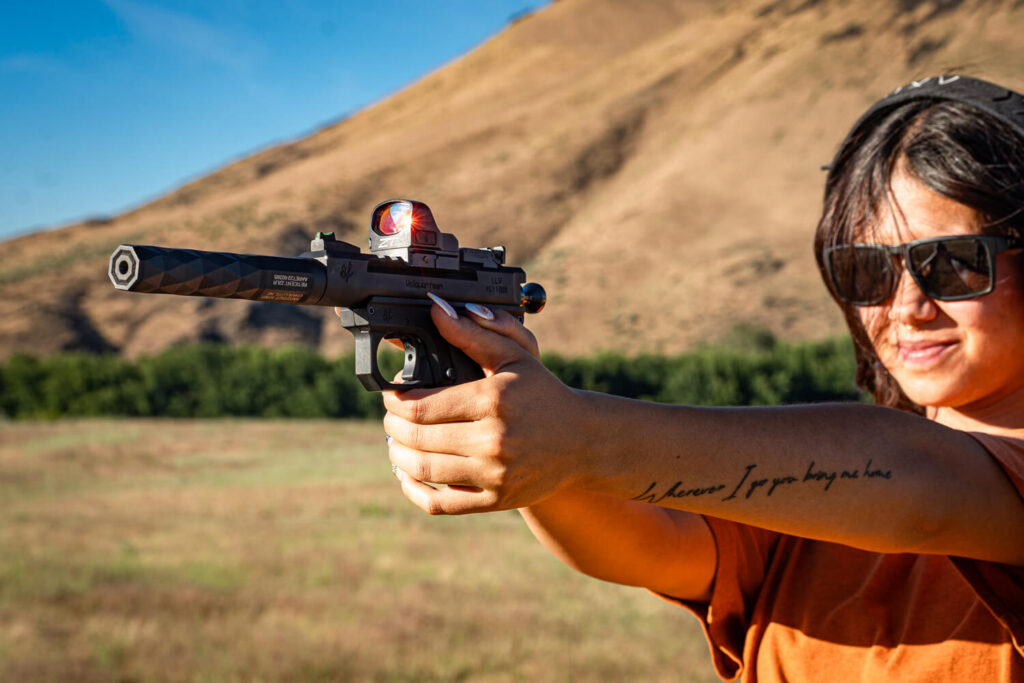
Direct thread is the better mount for a rimfire suppressor. Most threaded .22 rifles and pistols use the same 1/2×28 rimfire thread, so a direct-thread suppressor moves between hosts in about 20 seconds. A quick detach (QD) mount adds weight, length, and another part that has to run true, to solve a problem most rimfire owners never have.
Here’s what each mount does, what a QD system adds, and the one case where QD earns its place.
What’s the difference between direct thread and QD on a rimfire suppressor?
A direct-thread suppressor screws straight onto the threaded muzzle of the barrel. Nothing sits in between. The suppressor’s threads meet the barrel’s threads, and that’s the whole mount.
A quick detach (QD) mount splits the job in two. A muzzle device threads onto each host and stays there, and an adapter on the suppressor locks onto that device with lugs or a latch. You get a fast on and off, but every host needs its own muzzle device, and the suppressor carries the adapter everywhere it goes.
QD systems are common on centerfire rifles. On rimfire they’re the exception, and the reason is the thread.
Direct thread is one connection. QD is two connections plus a muzzle device on every gun.
Why is direct thread the better mount for most rimfire shooters?
Almost every threaded .22 host already shares one thread: 1/2×28 rimfire. A threaded Ruger 10/22, a threaded Ruger Mark IV, and most other threaded .22LR rifles and pistols come from the factory ready to take the same suppressor.
That standard is the whole case. A QD mount exists to make swapping fast, but on rimfire the swap is already fast. When every host has the same thread, the suppressor threads straight onto the next gun. A QD system adds parts, weight, and cost to do something direct thread already does.
Weight matters more on a rimfire suppressor than almost anywhere else. A .22 suppressor often rides on a light rifle or out at the end of a pistol, where every ounce changes the balance. An adapter on the suppressor and a muzzle device on the barrel put weight right where you feel it most.
Most .22 hosts already share the 1/2×28 rimfire thread. A QD mount adds weight and complexity to solve a problem rimfire doesn’t have.
What does a QD mount add to a rimfire suppressor?
Three things: weight, length, and another place for alignment to go wrong.
Weight and length come from the hardware itself. The adapter adds to the suppressor, and the muzzle device adds to every barrel. On a rimfire build, a short, handy package is usually the point.
The bigger issue is concentricity. Concentricity means the bore of the suppressor sits on the same centerline as the bore of the barrel. Every mount is another part between the two, and a mount that’s out of spec can push the suppressor off center. Far enough off center, and the bullet clips a baffle.
That’s a manageable risk, not a dealbreaker. Check concentricity with a bore alignment rod on every mount you install before you shoot through the suppressor. A QD system just means more mounts to check.
Every mount is another part between the barrel and the suppressor. If you run QD, check concentricity on each one.
How fast can you swap a direct-thread rimfire suppressor between guns?
About 20 seconds. When I move the Reticent 22 from a Tikka T1X to a Ruger Mark IV, I unthread it from the rifle, thread it onto the pistol, and snug it hand tight. No tools, no wrench, and no muzzle device to install first.
Hand tight is all a rimfire suppressor needs. Leave the wrench in the toolbox.
That swap time is the real comparison. A QD mount can shave a little off it, and you pay for that with hardware on every gun you own.
Hand tight, about 20 seconds, no tools. On rimfire, direct thread is already a quick swap.
When is a QD mount the right call for a rimfire suppressor?
When you own several rimfire hosts with odd thread pitches that don’t match each other. That’s the case QD solves well: put the right muzzle device on each gun, and one suppressor locks onto all of them.
Some older .22 pistols don’t use 1/2×28 rimfire at all. Our barrel thread pitch guide notes that guns like the Ruger SR22, the Sig Sauer Mosquito, and the Walther P22 need an adapter to take a standard suppressor. If your collection is full of those, a QD system can make sense.
If your hosts are threaded 1/2×28 rimfire, which covers most of them, QD is extra hardware with no payoff.
Another reason people go for a QD mount: a .22 suppressor rated for 5.56, so one suppressor moves between rimfire hosts and an AR-15. Many .22 suppressors aren’t rated for 5.56, and most that are can only fire a few rounds with time to cool in between. A .22LR also runs dirty, so I only shoot rimfire through my .22 suppressor and run a dedicated 5.56/6mm suppressor on my AR-15 rifles.
QD earns its place only when your rimfire hosts use different, nonstandard thread pitches. For a standard 1/2×28 rimfire collection, stay direct thread, and keep a dedicated suppressor for 5.56.
Why is the Reticent 22 direct thread only?
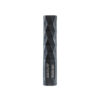
Because simple and light wins on rimfire. The Reticent 22 is a direct-thread 1/2×28 rimfire suppressor, built from grade 5 titanium by direct metal laser sintering (DMLS). The Reticent 22 is 5″ long, 1″ in diameter, and weighs 2.5 oz.
A QD system would add weight and length to a suppressor designed to carry as little of both as possible. Direct thread keeps the Reticent 22 at 2.5 oz and lets it move from a rifle to a pistol in about 20 seconds.
The Reticent 22 is direct thread only on purpose. No mount means no added weight, no added length, and no extra part to align.
Direct thread vs QD at a glance
| Factor | Direct thread | QD mount |
|---|---|---|
| How it attaches | Suppressor threads onto the barrel | Muzzle device on the barrel, adapter on the suppressor |
| Parts on each host | None beyond the threaded barrel | One muzzle device per gun |
| Added weight | None | Adapter plus muzzle device |
| Added length | None | Adapter plus muzzle device |
| Swap between hosts | About 20 seconds, hand tight | Fast, once every host has a muzzle device |
| Connections to align | One: barrel to suppressor | Two: barrel to muzzle device, muzzle device to adapter |
| Concentricity checks | One per host | One per mount installed |
| Best for | Hosts threaded 1/2×28 rimfire | Hosts with mixed, nonstandard thread pitches |
Direct thread is the simple choice for rimfire
If your .22 hosts are threaded 1/2×28 rimfire, choose direct thread. It’s lighter, shorter, and one less part to align, and the swap already takes about 20 seconds. Save QD for a collection full of odd thread pitches.
The Reticent 22 weighs 2.5 oz, threads straight onto any 1/2×28 rimfire .22LR host, and moves gun to gun by hand in about 20 seconds. Put it on a threaded Ruger Mark IV or Ruger 10/22 and run one suppressor across both.

Download the free guide now!
From choosing your first suppressor to taking it home, this guide walks you through everything. Don't be caught off guard, enter your email and we'll send it straight to your inbox!
Featured Products
-
 Reticent 22 Suppressor
Original price was: $375.00.$345.00Current price is: $345.00.


Frequently asked questions
Direct thread, for most shooters. Most threaded .22 rifles and pistols use the same 1/2×28 rimfire thread, so a direct-thread suppressor already swaps between hosts by hand in about 20 seconds. A QD mount adds weight, length, and another part to align. QD only makes sense when your hosts use different, nonstandard thread pitches.
It can if the mount is out of spec. Every mount adds a part between the barrel and the suppressor, and a mount that sits off center can push the suppressor’s bore off the barrel’s centerline. Check concentricity with a bore alignment rod on every mount you install before you shoot through the suppressor.
Hand tight. Thread the suppressor onto the 1/2×28 rimfire muzzle until it seats snugly by hand. A rimfire suppressor doesn’t need a wrench. Moving a direct-thread suppressor like the Reticent 22 from one host to another takes about 20 seconds with no tools.
No. The Reticent 22 is direct thread only, 1/2×28 rimfire. A QD mount would add weight and length to a suppressor built to carry as little of both as possible. The Reticent 22 weighs 2.5 oz, is 5 inches long, and threads onto any 1/2×28 rimfire .22LR host.
The thread will fit, but a thread that fits isn’t a caliber rating. 5.56 NATO barrels commonly use the same thread as 1/2×28 rimfire hosts. The Reticent 22 is rated for 22 LR only, so never mount it on a 5.56 barrel. Always check the caliber rating, not just the thread.
Latest Intel
Direct Thread vs QD for a Rimfire Suppressor
Oct
Teaching New Shooters With a Suppressed .22
Oct
Who Can Use Your Suppressor? Rules for Family & Friends in 2026
Oct
Suppressed Fest 2026 Recap
Oct
Vanquish 22 M81 Woodland Limited Ed: Available Now
Oct
Is the Ruger Precision Rimfire Discontinued?
Oct