


Educational
Do 22LR Suppressors Reduce Recoil and Improve Accuracy?
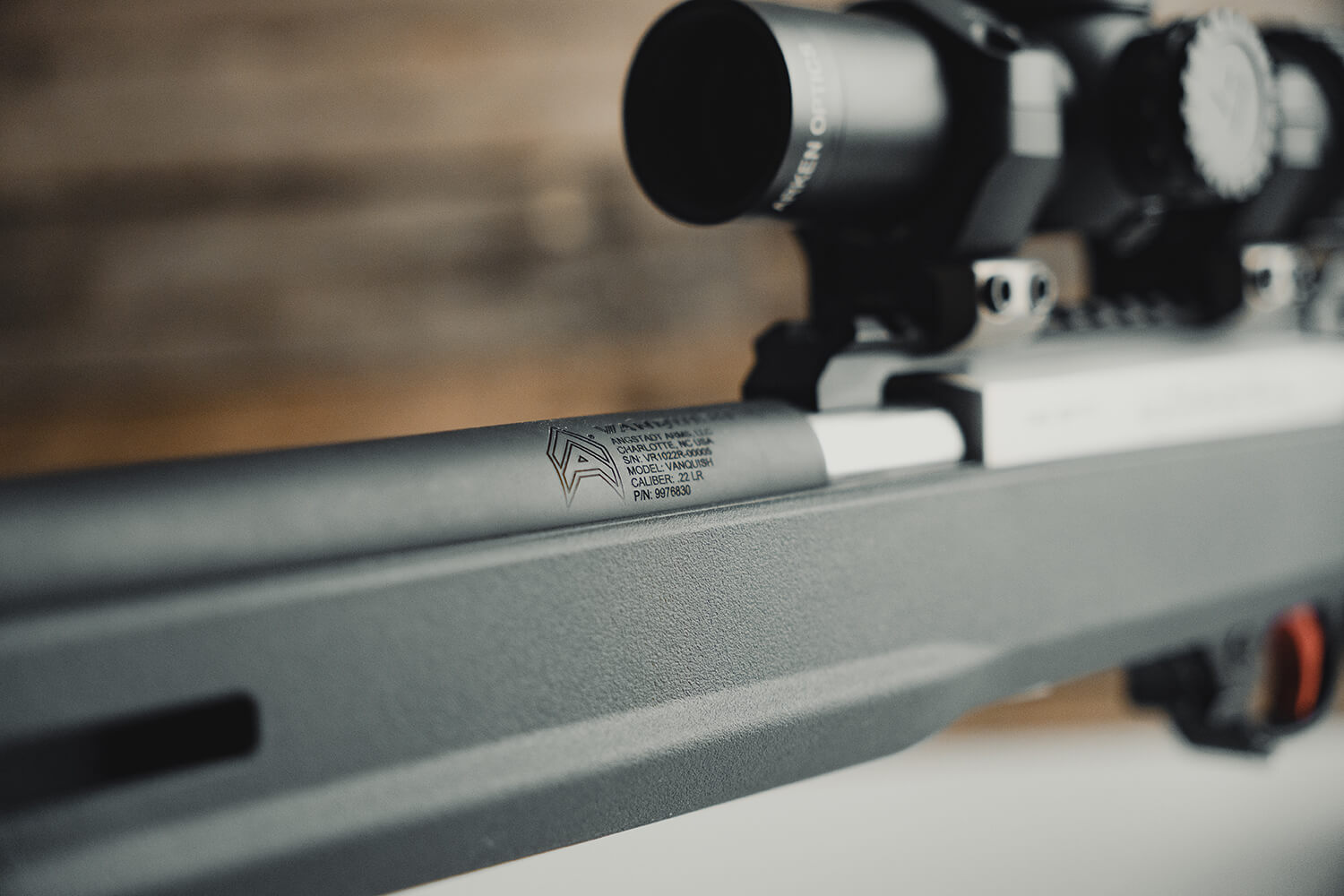
On a .22LR, a suppressor barely changes recoil, because a .22LR has almost none to begin with. A thread-on suppressor won’t make the rifle more accurate either. It can only keep the accuracy your barrel already has. The barrel decides accuracy, which is why only a suppressed barrel like the Vanquish 22 can make a rimfire more accurate.
Here’s what a suppressor changes on a .22, what it doesn’t, and why the barrel is the part to upgrade if tighter groups are the goal.
Does a suppressor reduce recoil on a .22LR?
Not in any way you’ll feel. A .22LR fires a light bullet with a small powder charge, so there’s almost no recoil for a suppressor to take away. Put a suppressor on a .22LR and the rifle feels the same against your shoulder.
What changes is the noise. A suppressor takes an unsuppressed .22LR from about 140 decibels and up down to the low 110s to upper 120s.
That’s where the “it shoots softer” feeling comes from. Shooters stop bracing for the bang, so they stop flinching, and their groups get better even though the rifle moves no less. It’s the same reason a suppressed .22 is the best rifle to teach a new shooter on.
A suppressor doesn’t reduce a .22LR’s recoil. It removes the noise, and the noise is what causes the flinch.
Do centerfire suppressors reduce recoil?
Yes, in felt recoil. A centerfire suppressor adds weight at the muzzle, and a heavier muzzle moves less when the rifle fires. The suppressor also contains the muzzle blast, so the shooter takes less of the concussion that comes with every shot.
That’s why a suppressed 5.56 or 6mm rifle feels softer to shoot. A .22LR doesn’t have enough recoil for the same effect to matter.
On centerfire, a suppressor reduces felt recoil through added weight and less concussion. On rimfire, there’s almost nothing to reduce.
Does a suppressor make a .22 more accurate?
A thread-on suppressor doesn’t. It threads onto your existing barrel, and by the time the bullet reaches the suppressor, the barrel’s chamber and rifling have already done their work. The best a thread-on suppressor can do is keep the accuracy your rifle already has.
Some manufacturers claim their suppressors improve accuracy. Usually they mean the added weight reduces recoil, which helps the shooter hold steadier. A .22LR has almost no recoil to reduce, so that argument doesn’t carry over to rimfire.
Accuracy comes from the barrel: the chamber, the bore, and the rifling. Change those and you change the groups. Our suppressed barrels replace the factory barrel instead of hanging off the end of it, which is the core difference in integrally suppressed vs traditional suppressors.
Only our suppressed barrels make the gun more accurate, because they replace the part that decides accuracy.
Why does the Vanquish 22 make a 10/22 more accurate?
Because the Vanquish 22 is a match-grade barrel with the suppressor built around it. The Vanquish 22 replaces the factory Ruger barrel with an 18.5″ precision ported 416R stainless steel barrel, button rifled, with a 1-16″ twist and a 0.920″ bull contour.
The chamber does the most work. The Vanquish 22 uses a Bentz match chamber, which is tighter than the factory sporter chamber, so each round sits straighter and more consistently in line with the bore.
Older integral designs went the other way. They paired a short, stubby barrel with a long core to get quiet, and gave up accuracy to do it. The Vanquish 22 is the only fully rifled .22LR suppressor, so it keeps the precision a full-length barrel delivers.
The same match-grade barrel is built into the Vanquish 22 Takedown, the Vanquish 22 for the Ruger Precision Rimfire, and the Vanquish AR-22.
In RECOIL’s independent test (Steven Kuo, March 18, 2026), a Vanquish 22 Takedown grouped 0.5 MOA with Norma Match-22, 1.5 MOA with Federal Gold Medal, and about 2 MOA with Federal Champion value ammo. Read the RECOIL test, or see our full Vanquish 22 review.
The Vanquish 22 makes a 10/22 quieter and more accurate at the same time, which a thread-on suppressor can’t do.

Thread-on suppressor vs suppressed barrel: what changes?
The Reticent 22 and the Vanquish 22 both make a .22 quiet. Only one of them changes the barrel.
| Factor | Reticent 22 (thread-on suppressor) | Vanquish 22 (suppressed barrel) |
|---|---|---|
| What it replaces | Nothing. Threads onto your barrel | The factory Ruger 10/22 barrel |
| Effect on recoil (.22LR) | None you’ll feel | None you’ll feel |
| Effect on accuracy | Keeps the accuracy your barrel already has | Upgrades the barrel: match chamber, button rifling |
| Chamber | Your rifle’s factory chamber | Bentz match chamber |
| Weight | 2.5 oz | 1.3 lb (18.5″ barrel) |
| Moves between guns | Yes, any 1/2×28 rimfire host | No. The suppressor is the barrel |
| Best for | One suppressor for the whole safe | One quiet, accurate 10/22 |
Buy the Reticent 22 to quiet every rimfire you own. Buy the Vanquish 22 to make one rifle quieter and more accurate. Our rimfire suppressor buyer’s guide matches each one to the job.
Do you need to re-zero after installing a suppressor?
Yes. Zero your rifle after you install a suppressor. There will always be some point of impact shift, the change in where the bullet lands when a suppressor goes on or comes off. How far it moves depends on the rifle, the suppressor, and the ammo, so confirm it on paper.
With the Vanquish 22, the suppressor is the barrel, so there’s nothing to take on and off. Zero it once after install and the zero stays with the barrel.
Zero after installing any suppressor. There will always be some point of impact shift.
Which upgrade should you make?
If tighter groups are the goal, upgrade the barrel. The Vanquish 22 installs in about 5 minutes and instantly upgrades your accuracy, and the rifle gets quiet in the same step. The tradeoff is that it stays on one rifle.
If you want one suppressor for every 1/2×28 rimfire you own, the Reticent 22 is the lightest and quietest full-size .22LR suppressor. It won’t tighten your groups, but it makes every rifle in the safe quieter.
Want a 10/22 that’s quiet and shoots tighter? The Vanquish 22 installs in about 5 minutes and turns your rifle into a tack driver.
Featured Products
-
 Vanquish 22 Suppressed Ruger 10/22 Barrel
Original price was: $599.00.$535.00Current price is: $535.00.
-
 Vanquish 22TD Suppressed Ruger 10/22 Takedown Barrel
Original price was: $599.00.$535.00Current price is: $535.00.
-
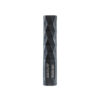 Reticent 22 Suppressor
Original price was: $375.00.$345.00Current price is: $345.00.
Download the free guide now!
From choosing your first suppressor to taking it home, this guide walks you through everything. Don't be caught off guard, enter your email and we'll send it straight to your inbox!
Frequently asked questions
On a .22LR, not noticeably. A .22LR has almost no recoil to reduce. On a centerfire rifle, a suppressor reduces felt recoil because it adds weight at the muzzle and contains the muzzle blast, so the shooter takes less concussion. The bigger change on a .22 is the noise, which is what causes flinching.
A thread-on suppressor won’t. It keeps the accuracy your barrel already has. To make a 10/22 more accurate, replace the barrel. The Vanquish 22 is a match-grade integrally suppressed barrel with a Bentz match chamber and a button-rifled 416R stainless bore, so the rifle gets quieter and more accurate in one upgrade.
Yes. Zero your rifle after you install a suppressor, because there will always be some point of impact shift. The amount depends on the rifle, the suppressor, and the ammo, so confirm it on paper. With the Vanquish 22, the suppressor is the barrel, so you zero once after install.
In RECOIL’s March 2026 test, a Vanquish 22 Takedown grouped 0.5 MOA with Norma Match-22, 1.5 MOA with Federal Gold Medal, and about 2 MOA with Federal Champion value ammo. The fully rifled barrel and Bentz match chamber drive the accuracy, with the suppression built around the barrel.
Usually the claim rests on recoil. On a centerfire rifle, a suppressor’s added weight reduces felt recoil, which can help the shooter hold steadier. A .22LR has almost no recoil, so a thread-on .22 suppressor can’t improve accuracy that way. Only a barrel upgrade changes rimfire accuracy.
Latest Intel
Do 22LR Suppressors Reduce Recoil and Improve Accuracy?
Nov
What’s the Best Suppressor for the CZ 457?
Nov
Can You Travel or Hunt Out of State with a Suppressor?
Nov
Direct Thread vs QD for a Rimfire Suppressor
Oct
Teaching New Shooters With a Suppressed .22
Oct
Who Can Use Your Suppressor? Rules for Family & Friends in 2026
Oct