


Educational
Integrally Suppressed vs Traditional Suppressor: Which Is Quieter?
Which is quieter depends on the ammo and how you measure it. A traditional thread-on suppressor on subsonic ammo posts the lowest number on a meter. An integrally suppressed barrel wins the quiet game when you’re shooting cheap standard-velocity ammo and it removes the sonic crack that a thread-on suppressor can’t. Neither one is quietest in every case, and that is the honest answer most comparisons skip.
Our own thread-on Reticent 22 meters 113.4 decibels on a bolt gun, the lowest figure we publish, but it needs subsonic ammo to get there. Our Vanquish 22 integral quiets standard-velocity Remington Thunderbolt that a thread-on suppressor would let crack past the sound barrier. Same goal, two different roads to get there.
Here is which setup is quieter, why the meter and the range sometimes disagree, and which one to put on your rifle.
What we’re comparing
In this post we’re comparing two of our own products. The following will not always hold true for other manufacturers of traditional or integral suppressors.
Which is quieter, an integral or a traditional suppressor?
On subsonic ammo, measured at the muzzle, our thread-on suppressor reads quietest. On the ammo most people actually feed a .22, an integrally suppressed barrel is quieter, because it forces standard-velocity rounds subsonic so they never crack. The gap on a meter is small. The gap in how the two feel at the bench comes down to what you load.
Reviewers who have run the Vanquish 22 integral back this up. Lynx Defense found the loudest sound at the bench was the bolt cycling, not the shot, and RECOIL Magazine, testing it against a threaded barrel and a standalone suppressor, found the Vanquish noticeably quieter.
The meter favors a thread-on suppressor on subsonic ammo. The range favors an integral on standard velocity ammo.
What is the difference between an integrally suppressed barrel and a traditional suppressor?
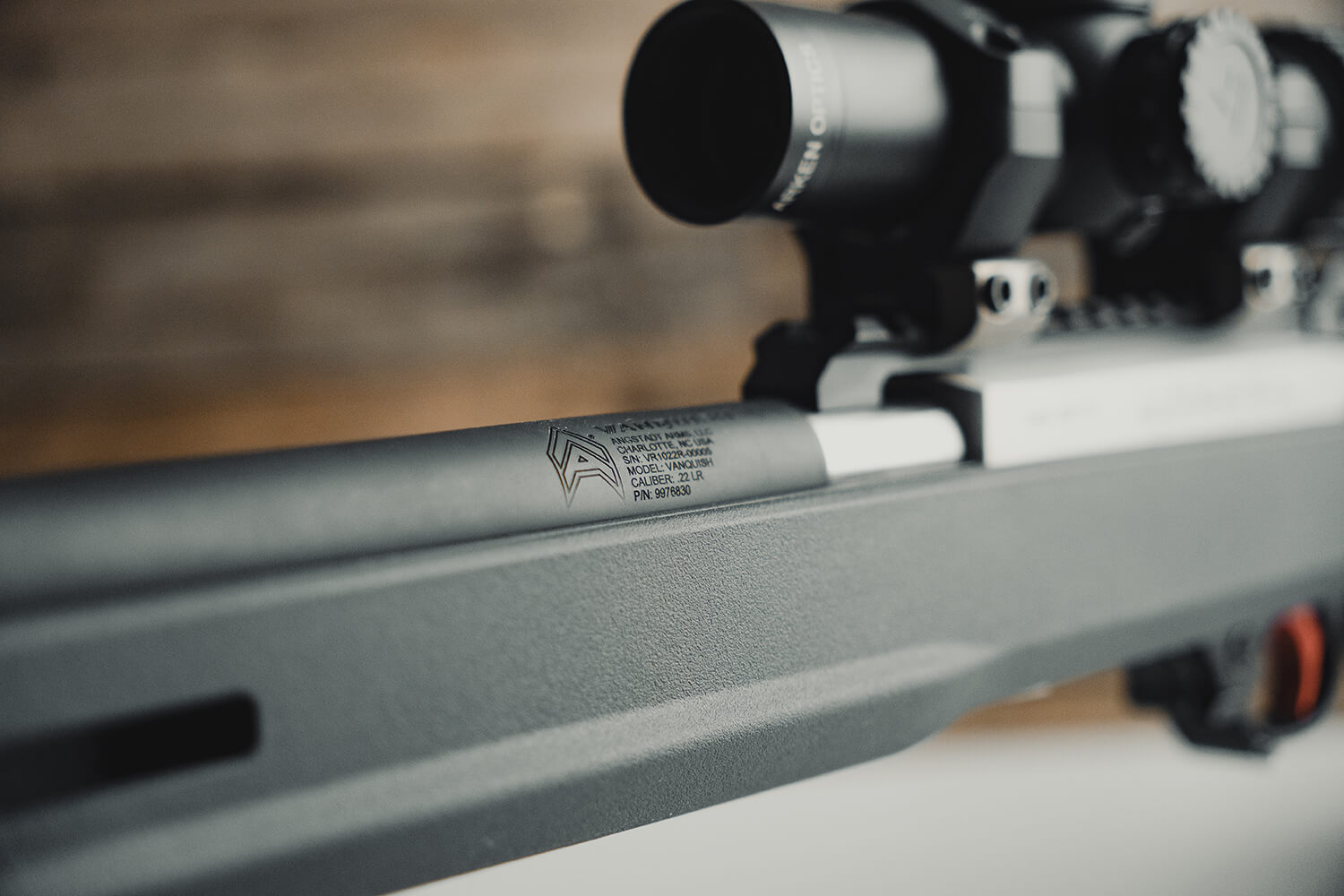
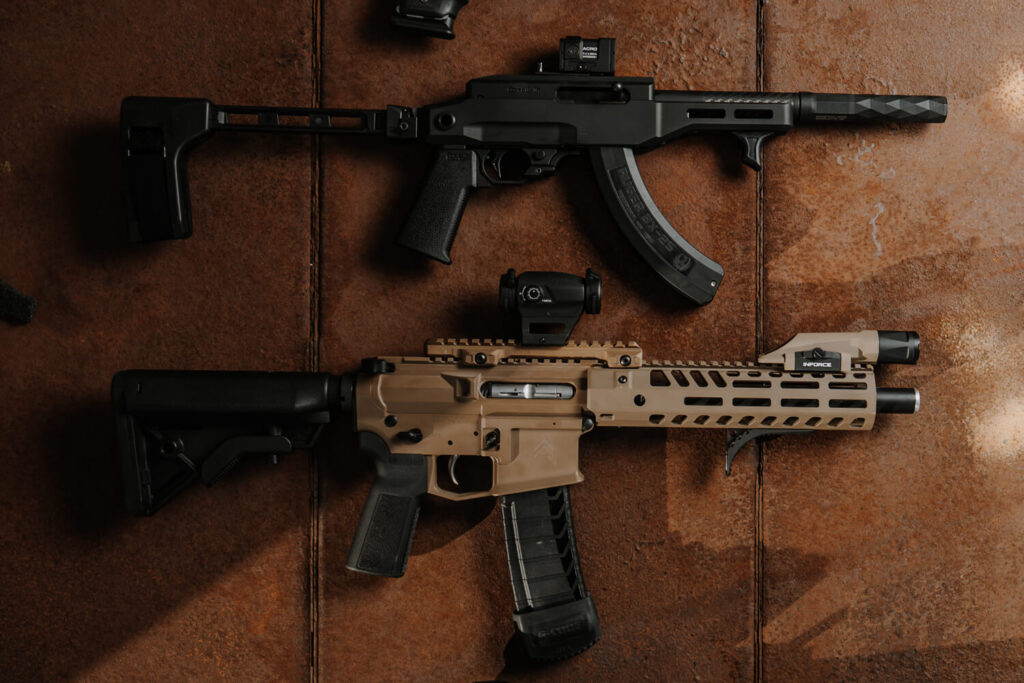
A traditional suppressor is a separate tube that threads onto the muzzle of a normal barrel. An integrally suppressed barrel builds the suppression into the barrel itself, venting gas along its length, so there is nothing to thread on and nothing hanging off the front of the gun.
The Reticent 22 is the traditional route: a 2.5 ounce thread-on suppressor that moves across any 1/2×28 rimfire you own. The Vanquish 22 is the integral route: a replacement barrel for the Ruger 10/22, Ruger RPR and AR-22 with the suppression machined into it. The full build is in our integrally suppressed 10/22 guide.
A traditional suppressor quiets a loud gun. An integral makes the gun quiet from the start.
Why does the ammo decide which one is quieter?
Because most of a .22’s noise is either muzzle blast or a sonic crack, and the two designs handle the crack differently. Most .22 ammo leaves a normal barrel above the speed of sound, so it cracks like a tiny rifle no matter what suppressor is on the muzzle. A thread-on suppressor reaches its lowest numbers only when you feed it subsonic ammo that never breaks the sound barrier in the first place.
An integrally suppressed barrel vents gas along the bore and bleeds velocity as the bullet travels, so standard-velocity ammo exits below the sound barrier and never cracks. You get subsonic quiet out of supersonic ammo.
A thread-on suppressor needs subsonic ammo to be quiet. An integral makes cheap standard ammo run subsonic on its own.
Why do some old school integrals read quieter on a meter?
An old school traditional integral gets quiet by pairing a very short, stubby barrel with a long monolithic core, which reduces peak sound at the cost of barrel accuracy. The Vanquish 22 goes the other way. It keeps a full, match-grade rifled barrel and builds the suppression around it, so it trades that last couple decibels for precision you can measure on paper.
A stubby-barrel integral can shave a couple decibels, but it gives up the accuracy a full rifled barrel is there to deliver.

Is a traditional thread-on suppressor ever the quieter choice?
Yes, and we build one. On subsonic ammo, a dedicated thread-on suppressor like the Reticent 22 reads quieter on a meter than an integral, and it moves from a semi-auto rifle to a pistol to a bolt gun, so one purchase quiets the whole safe. If your priority is the lowest possible number and the ability to suppress multiple guns, the thread-on is the better buy. If you are still weighing the two formats, our guide to integral vs standalone suppressors walks through which setup fits you.
For the lowest metered number and one suppressor across many guns, a thread-on wins. That is why the Reticent 22 exists.
Quiet is not the only question: accuracy, maintenance, and moving between guns
Sound is where this comparison starts, not where the decision ends. An integrally suppressed barrel like the Vanquish 22 is a full match-grade barrel, so it improves accuracy instead of only quieting the gun, and because it is baffleless there is almost nothing to clean. A traditional thread-on suppressor adds a little length and weight at the muzzle, but it swaps between guns in seconds. Neither is better in the abstract. They are built for different owners.
The accuracy side is covered in detail in our Vanquish 22 review.
Pick the integral for one quiet, accurate, low-maintenance rifle. Pick the thread-on for one suppressor that quiets your whole safe.
Integral vs traditional suppressor, side by side
| Factor | Integrally suppressed barrel (Vanquish 22) | Traditional thread-on suppressor (Reticent 22) |
|---|---|---|
| Lowest metered sound | Slightly higher on a meter | Quietest on subsonic ammo |
| How it gets quiet | Vents gas along the barrel, forcing the round subsonic | Traps and slows gas in a tube with baffles |
| Ammo for quietest results | Cheap standard-velocity ammo already runs subsonic | Needs subsonic ammo to reach its lowest numbers |
| Accuracy | Full match-grade rifled barrel, sub-MOA capable | Depends on the host barrel it threads onto |
| Maintenance | Baffleless, clean the same way you would a regular barrel | Sealed suppressor, clean by ultrasonic or solvent |
| Moves between guns | No, dedicated to one rifle | Yes, any 1/2×28 rimfire |
| Weight at the muzzle | None, nothing hangs off the barrel | 2.5 oz |
| Best for | One quiet tack-driver rifle | One suppressor across every rimfire you own |
| Compatibility | Ruger 10/22 (standard, takedown & charger), Ruger RPR and AR-22 with CMMG dedicated BCG | Any 1/2×28 threaded rimfire |
The short version
- On subsonic ammo and a meter, a thread-on suppressor reads quietest.
- On cheap standard-velocity ammo, an integrally suppressed barrel is quieter because it forces the round subsonic.
- The integral also wins accuracy and maintenance; the thread-on wins portability across guns.
- Choose by the ammo you shoot and whether you want one quiet rifle or one suppressor for the whole safe.
Which one belongs on your rifle?
If you want one dedicated rifle that is quiet, accurate, and as close to set and forget as a rimfire gets, the Vanquish 22 integral barrel is the answer, for $535. If you want the lowest number and one suppressor that threads onto every 1/2×28 rimfire you own, the Reticent 22 is 2.5 ounces of Grade 5 titanium for $345. Interested in going quiet? See our guide to buy a suppressor online.
Featured Products
-
 Vanquish 22 Suppressed Ruger 10/22 Barrel
Original price was: $599.00.$535.00Current price is: $535.00.
Vanquish 22 Suppressed Ruger 10/22 Barrel
Original price was: $599.00.$535.00Current price is: $535.00. -
 Vanquish 22TD Suppressed Ruger 10/22 Takedown Barrel
Original price was: $599.00.$535.00Current price is: $535.00.
Vanquish 22TD Suppressed Ruger 10/22 Takedown Barrel
Original price was: $599.00.$535.00Current price is: $535.00. -
 Reticent 22 Suppressor
Original price was: $375.00.$345.00Current price is: $345.00.
Reticent 22 Suppressor
Original price was: $375.00.$345.00Current price is: $345.00.
Frequently asked questions
It depends on the ammo. On subsonic ammo measured at the muzzle, a traditional thread-on suppressor reads quieter. On standard-velocity ammo, an integrally suppressed barrel is quieter, because it forces the round below the sound barrier so it never cracks. The gap on a meter is small.
No. That is the point of an integral like the Vanquish 22. It vents gas along the barrel and bleeds velocity, so cheap standard-velocity ammo such as Remington Thunderbolt leaves the muzzle subsonic and never cracks. A traditional thread-on suppressor needs subsonic ammo to reach its quietest numbers.
The Reticent 22 thread-on suppressor reads quieter on a meter, at 113.4 decibels on a bolt gun with subsonic ammo. The Vanquish 22 integral is close and gets you quiet on cheap standard-velocity ammo with nothing hanging off the muzzle. One wins the number, the other wins on everyday ammo.
On subsonic ammo, a quality thread-on suppressor is actually quieter than most integrals on a meter. Where it falls behind is standard-velocity ammo, which cracks past the sound barrier no matter the suppressor. An integrally suppressed barrel solves that by slowing the round inside the barrel itself.
A well-built one does. The Vanquish 22 is a full match-grade rifled barrel with a Bentz chamber, not a short stub feeding a long core, so it shoots like a precision barrel that happens to be quiet. Reviewers have recorded groups as tight as 0.5 MOA with match ammo.
Latest Intel
ATF’s NFA Open Letter: Do Suppressors Still Need to Be Registered?
Oct
10/22 Takedown Suppressor: The Quiet Build That Packs Small
Oct
Top 7 Suppressor Myths, Debunked
Oct
DOJ Won’t Appeal the NFA Ruling: What It Means for Buyers
Oct
Best Suppressor for the Ruger Mark IV
Oct
How Long Does a Rimfire Suppressor Last?
2 Comments
Sep