


Educational
Angstadt Arms Vanquish 22 Review: Suppressed Ruger 10/22

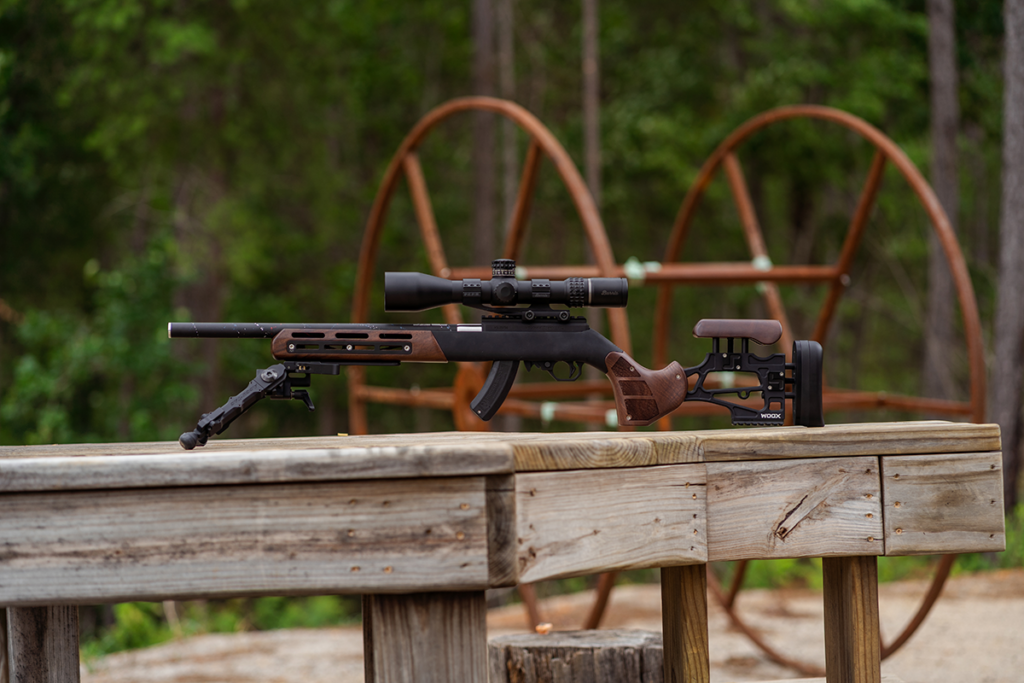
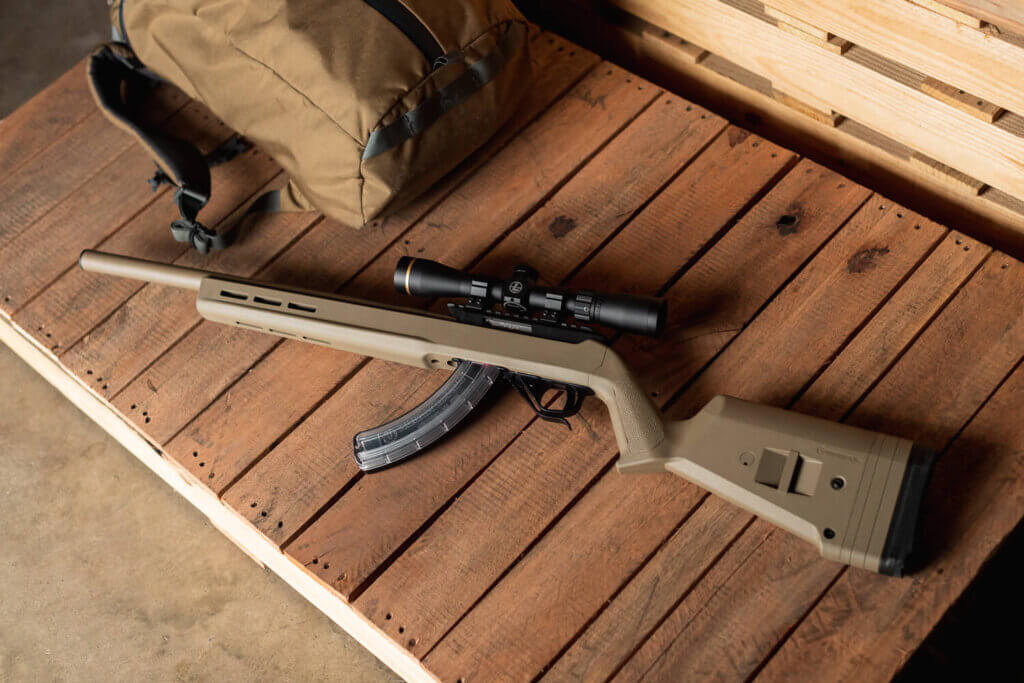
The Vanquish 22 is an integrally suppressed replacement barrel for the Ruger 10/22 that makes standard velocity ammo run subsonic, groups as tight as .50 MOA with match ammo, and is about the easiest suppressor to clean because there are no baffles inside it. Installation takes all of five minutes and it has a fully rifled match barrel as opposed to a stubby nub and long monocore. All for $535.
Here is the full look at the specs, the sound, the accuracy, and intended application.
What is the Vanquish 22 in one line?
A match grade 10/22 barrel with the suppressor built into it, so the gun is quiet and accurate with nothing hanging off the muzzle. Most integrals trade accuracy for quiet by bolting a long can onto a short, stubby barrel. The Vanquish keeps the full rifled barrel and builds the suppression around it.
That is the entire reason it exists, and it is what the rest of this review comes back to.

Vanquish 22 specs
| Spec | Detail |
|---|---|
| Type | Integrally suppressed replacement barrel |
| Host | Ruger 10/22 (standard, Takedown, Charger, Ruger Precision Rimfire); AR-22 version available |
| Barrel | 18.5 inch precision ported Shaw barrel, 416R stainless steel |
| Design | Fully rifled, baffleless |
| Chamber | Bentz match chamber |
| Twist | 1 in 16 |
| Contour | 0.920 bull |
| Shroud | 6061 aluminum, Cerakote finish |
| Weight | 1.3 lb (18.5 inch); 14.7 oz on the 12 inch Charger |
| Accuracy | As tight as 0.5 MOA with match ammo |
| Ammo | Runs standard velocity subsonic, no first round pop |
| Price | $535 |
How quiet is it, really?
Pretty damn quiet according to reviewers. The suppression is machined into the barrel and vents gas along its length, so standard velocity .22 leaves the muzzle below the sound barrier and never cracks.
Lynx Defense found that on CCI subsonic “the loudest sound at the bench was the bolt cycling, not the shot”. RECOIL, testing it against a threaded barrel and a standalone silencer, found “the Vanquish was noticeably quieter.”
Truth be told, our thread on Reticent 22 suppressor is our quietest .22 on paper, but that requires subsonic ammunition. The Vanquish gets you quiet on cheap, standard ammo like Remington Thunderbolt and there’s nothing hanging off the front of the gun.
How accurate is it?
This is where the integral design earns its price. Because the Vanquish is a fully rifled match barrel with a Bentz chamber, not a short stub feeding a monocore, it shoots like a precision barrel that happens to be quiet.
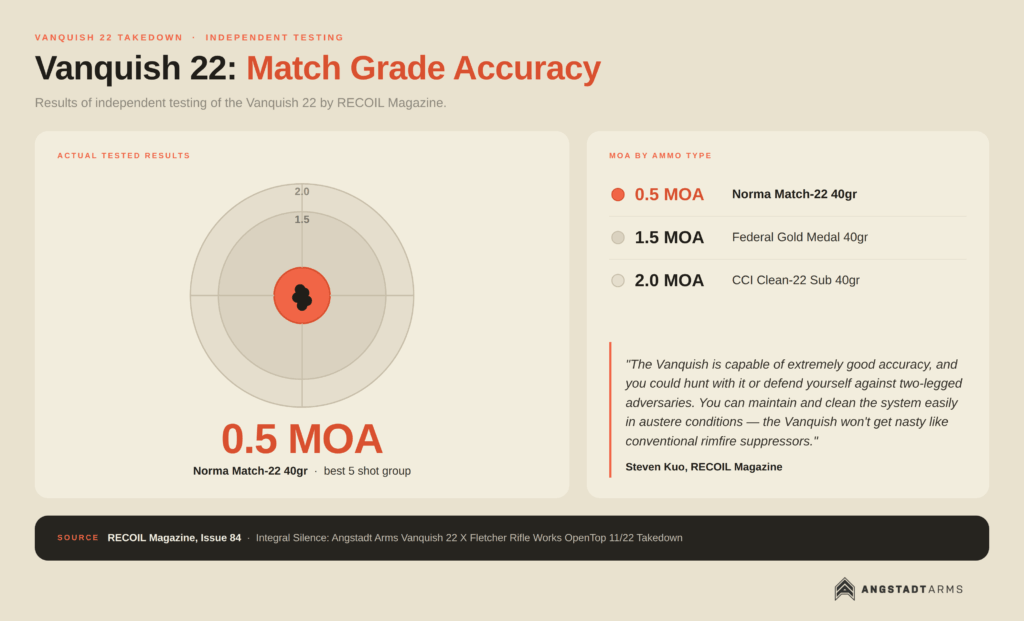
RECOIL ran it across four loads and got 0.5 MOA with Norma Match-22, 1.5 MOA with Federal Gold Medal, and roughly 2 MOA on value ammo. Achieving half-MOA out of a suppressed rimfire is a benchmark match-grade barrels are happy to hit. The Vanquish delivers that precision with the suppressor integrated directly into the platform.
Does an integral really beat a standalone suppressor?
It depends on what you’re trying to achieve. A dedicated thread on suppressor like the Reticent 22 will read quieter on a meter and moves across every rimfire in your safe. The Vanquish is a dedicated barrel for one host, and it wins on the things a suppressor cannot touch.
Nothing hangs off the front of the muzzle, so balance and length remains the same as factory. The barrel is a precision match grade, so accuracy is improved. And cleaning is almost non existent, pretty incredible for a rimfire suppressor. If you want one suppressor for the whole safe, buy the Reticent 22. If you want one 10/22 that is quiet, accurate, and permanent, the integral is the better option. The full breakdown of the two paths is in our integrally suppressed 10/22 guide.
What is it made of and how is it built?
The barrel is a precision ported Shaw blank in 416R stainless, cut with a Bentz match chamber and wrapped in a 6061 aluminum shroud with a Cerakote finish. There are no baffles and no monocore stack. The porting and the internal volume do the quiet work.
Baffleless is the detail that changes how you live with it: there is nothing inside for lead to cling to, the way a traditional baffled suppressor does. It is the same principle behind the whole line, covered in the integral guide.
What does it fit?
The Ruger 10/22 family, in four configurations. The full size Ruger 10/22 rifle, the 10/22 takedown model, a 12″ 10/22 Charger barrel and a Ruger Precision Rimfire barrel.
Please note: the Vanquish 22 barrel has .920 diameter and requires a stock or chassis system designed to fit a Ruger 10/22 bull barrel profile.
There is also an AR-22 version for a dedicated suppressed AR-22 running a CMMG rimfire bolt.
How do you install it?
The 10/22 barrel is held in place by a V block and two screws, so the swap is a five minute job at the bench.
Watch the video below and see just how quick and easy it is to install the Vanquish 22 barrel, with no gunsmithing required. See our resources page for installation instructions for other Vanquish 22 models.
How is it to clean and live with?
This is a huge advantage of a baffleless system. Rimfire is a dirty round, and a baffled suppressor turns cleanup into a chore of scraping lead off of individual baffles and around tight monocore corners. The Vanquish has no where for lead to hide.
Slide the shroud off by hand, wipe down the exterior of the barrel and run a patch down the bore like any other barrel. If you find your ports become partially clogged after thousands of rounds you can simply shoot some high velocity ammunition and it will blow it right out. On a dedicated quiet 10/22, it’s as close to set and forget as it gets.
What are the tradeoffs?
A fair review names any tradeoffs. The Vanquish 22 is dedicated to one host, so it does not move across guns the way a threaded suppressor does. Traditional integrals with short, stubby barrels and long monocore suppressors read slightly quieter on a meter but they do so by giving up barrel length and accuracy.
The Vanquish trades that sliver of peak quiet for a full match barrel, better accuracy, and no cleaning headache, which is the right trade for most 10/22 owners. If you want the absolute lowest meter number or one suppressor for many guns, the standalone Reticent 22 is the other path.
Who should buy the Vanquish 22?
The shooter that wants a quiet, dedicated tack driver he can pickup and use at any time with any type of ammunition.
Interested in picking up a Vanquish 22? See our guide to buy a suppressor online.
Choose your Vanquish 22 Model
-
 Vanquish 22 Suppressed Ruger 10/22 Barrel
Original price was: $599.00.$535.00Current price is: $535.00.
Vanquish 22 Suppressed Ruger 10/22 Barrel
Original price was: $599.00.$535.00Current price is: $535.00. -
 Vanquish 22TD Suppressed Ruger 10/22 Takedown Barrel
Original price was: $599.00.$535.00Current price is: $535.00.
Vanquish 22TD Suppressed Ruger 10/22 Takedown Barrel
Original price was: $599.00.$535.00Current price is: $535.00. -
 Vanquish 22 Suppressed Ruger Precision Rimfire Barrel
Original price was: $599.00.$535.00Current price is: $535.00.
Vanquish 22 Suppressed Ruger Precision Rimfire Barrel
Original price was: $599.00.$535.00Current price is: $535.00. -
 Vanquish 22 Suppressed Ruger Charger Barrel
Original price was: $599.00.$535.00Current price is: $535.00.
Vanquish 22 Suppressed Ruger Charger Barrel
Original price was: $599.00.$535.00Current price is: $535.00. -
 Vanquish AR-22 Suppressed Barrel
Original price was: $599.00.$535.00Current price is: $535.00.
Vanquish AR-22 Suppressed Barrel
Original price was: $599.00.$535.00Current price is: $535.00.


Frequently asked questions
Because the Vanquish 22 is a fully rifled match barrel with a Bentz chamber rather than a short stub feeding a monocore, it shoots like a precision barrel. In independent testing by RECOIL it grouped as tight as 0.5 MOA with Norma Match-22 ammo, 1.5 MOA with Federal Gold Medal, and around 2 MOA on value ammo. That is match barrel accuracy with the suppressor built in.
On subsonic ammo the loudest sound at the bench is the bolt cycling, not the shot. The suppression is machined into the barrel and vents gas along its length, so standard velocity .22 runs subsonic and never cracks the sound barrier. A dedicated standalone suppressor can read lower on a meter, but the Vanquish gets you hearing safe on cheap standard ammo with nothing added to the muzzle.
There are no baffles to clean. The Vanquish 22 is a baffleless integral barrel, so it does not collect the lead stack a baffle suppressor does. The front cap comes off by hand and you clean the bore with standard .22 tools, with no armorer’s wrench and no disassembly. On a dedicated quiet 10/22 it is close to set and forget.
The Ruger 10/22 family. There is an 18.5 inch barrel for the standard 10/22, an 18.5 inch Takedown barrel for the takedown rifle, a 12 inch barrel for the 10/22 Charger, and an 18.5 inch option for the Ruger Precision Rimfire. An AR-22 version is also available for a dedicated suppressed .22 AR. The 10/22 barrel swaps in about five minutes with no gunsmithing.
The Vanquish 22 is $535. It is a registered NFA item, and with the federal transfer tax now at $0 as of January 1, 2026, the only cost is the barrel itself plus the wait for approval.
Latest Intel
Suppressed Fest 2026: This Weekend!
Oct
How to Sell or Transfer a Suppressor in 2026
Oct
First Round Pop: What Causes It and How to Get Rid of It
Oct
ATF’s NFA Open Letter: Do Suppressors Still Need to Be Registered?
Oct
10/22 Takedown Suppressor: The Quiet Build That Packs Small
Oct
Top 7 Suppressor Myths, Debunked
Oct