


Educational
NFA Gun Trust vs Individual in 2026: Which Is Better?

The choice comes down to one question: does anyone besides you need to legally possess the suppressor, now or after you are gone?
Buy it as an individual and only you can use it unsupervised. Buy it on an NFA trust and everyone named on the trust can, and it passes to your heirs without a new transfer. Both file the same Form 4, and as of 2026 both pay $0 in tax.
The trust buys access and inheritance, not a faster or cheaper approval.
What is the difference between an NFA trust and individual ownership?
An individual registration puts the suppressor in one person’s name. Legally, only that person may possess and use it without the owner present. An NFA trust is a legal entity that owns the suppressor instead of a person, so anyone named as a trustee can legally possess and use it.
The can belongs to the trust, and the trust does not die, move away, or forget where it put the paperwork.
Who can actually use the suppressor under each?
This is the practical fork. Under individual ownership, if your spouse or a buddy shoots your suppressed rifle at the range while you are standing there, that is fine, because you are present and in control. Hand it to them to take out alone and it is not.
Under a trust, every co-trustee has legal possession in their own right, so your spouse or adult kids can take the can out without you. If you want more than one person to use it independently, a trust is the answer and individual ownership is not.
What happens to the suppressor when you die?
Registered as an individual, the suppressor has to transfer to your heir through a Form 5, which still needs ATF approval before they can possess it. Held in a trust, the successor trustee you named simply steps in and keeps operating under the existing trust, with no new transfer to file.
That is the estate planning case for a trust: it keeps your heirs from inheriting a registered item they cannot legally touch until the government signs off.
Do you still avoid fingerprints with a trust?
No, and this is the myth worth killing. Under the ATF’s 41F rule, every responsible person on a trust submits fingerprints, a photo, and a background check, the same as an individual. The old trust shortcut that skipped prints ended in 2016.
Beneficiaries who do not exercise control over the item are not responsible persons, so they do not submit prints, but every trustee who can use the can does.
Does the $0 stamp change the trust decision?
It removes the cost of stacking items, not the reason to use a trust. Each NFA item still gets its own transfer, but at $0 each in 2026 there is no longer a $200 charge per can. So the trust question is now purely about who can use it and who inherits it, with the old per stamp math out of the picture.
For what the $0 change did and did not touch, see our breakdown of whether you still need a tax stamp for a suppressor.
Is one faster to get approved?
Roughly the same, with individual filings sometimes clearing a little quicker because a trust can list multiple responsible persons who each need a background check. The gap is measured in weeks, not months, and it is not a strong reason to pick one path over the other.
Both run through the electronic Form 4, and the process from order to pickup is the same either way, laid out in our guide to buying a suppressor online.
NFA trust vs individual, side by side
| Factor | Individual | NFA trust |
|---|---|---|
| Who can possess it alone | Only the registered owner | Every trustee named on the trust |
| Passing to heirs | Requires a Form 5 transfer and approval | Successor trustee continues, no new transfer |
| Fingerprints and photo | Required | Required for every responsible person |
| Transfer tax (2026) | $0 | $0 |
| Upfront cost | None beyond the can | Cost to set up the trust |
| Best for | A single user who wants it simple | Multiple users and estate planning |
So which should you choose?
Buy as an individual if you are the only person who will use the can and you want the least paperwork. Set up a trust if your spouse or kids should be able to shoot it without you, or if you want it to pass cleanly to your heirs.
A trust is a legal document, so most buyers set one up through an attorney or an online NFA trust service, and it then covers every NFA item you buy after it. Neither choice changes the suppressor you get or what it costs at $0 tax.
Pick the suppressor first, then the paperwork
The trust question is the same no matter which can you buy, so start with the suppressor. The Reticent 22 is a 2.5 ounce standalone can that threads onto any 1/2×28 rimfire for $345, so one purchase quiets the whole safe.
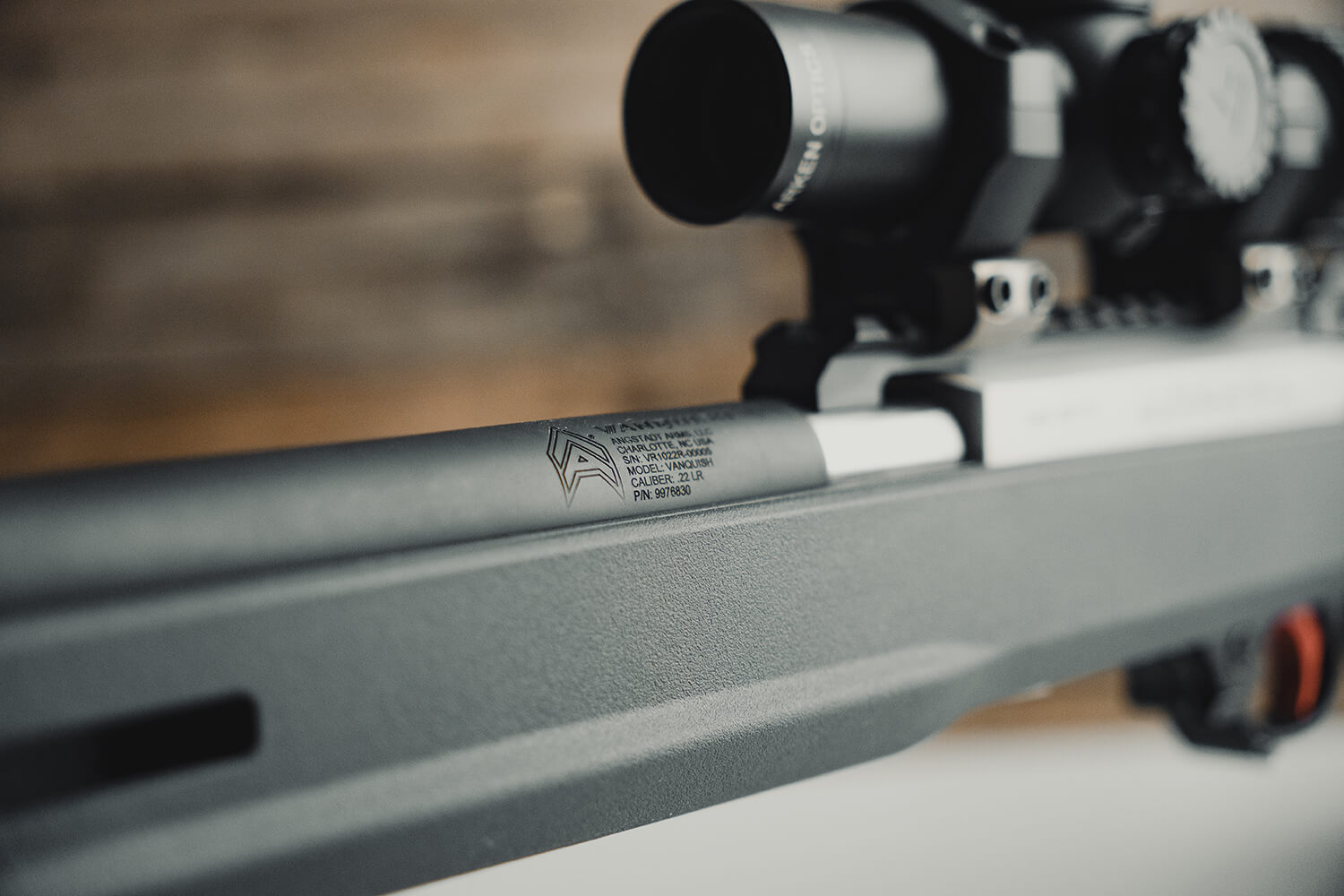
The Vanquish 22 replaces the barrel entirely for a dedicated quiet build at $535. Both are registered NFA items, and both work on a trust or an individual filing.
Download the free guide now!
From choosing your first suppressor to taking it home, this guide walks you through everything. Don't be caught off guard, enter your email and we'll send it straight to your inbox!
Featured Products
-
 Reticent 22 Suppressor
Original price was: $375.00.$345.00Current price is: $345.00.
Reticent 22 Suppressor
Original price was: $375.00.$345.00Current price is: $345.00. -
 Reticent 360L Suppressor
Original price was: $895.00.$795.00Current price is: $795.00.
Reticent 360L Suppressor
Original price was: $895.00.$795.00Current price is: $795.00. -
 Reticent 360S Suppressor
Original price was: $895.00.$795.00Current price is: $795.00.
Reticent 360S Suppressor
Original price was: $895.00.$795.00Current price is: $795.00.


Frequently asked questions
It depends on who will use the suppressor. A trust lets everyone named on it possess and use the can without you present and lets it pass to your heirs without a new transfer. Individual ownership is simpler but limits legal use to you alone. Neither is faster or cheaper to approve in 2026, since both file the same Form 4 at $0 tax.
Yes. Under the ATF’s 41F rule, every responsible person on a trust submits fingerprints, a photo, and a background check, just like an individual filer. The old trust process that skipped fingerprints ended in 2016. Beneficiaries who do not exercise control over the item do not need to submit prints.
No. The $0 stamp removes the per item tax, but a trust was never mainly about saving tax. Its value is letting multiple people use the suppressor and letting it pass to your heirs without a new transfer. Those benefits are unchanged by the 2026 tax change.
Only while you are present and in control. If the suppressor is registered to you as an individual, your spouse cannot legally take it out alone. To let them use it without you, the can needs to be held in a trust that names them as a trustee.
Latest Intel
Top 7 Suppressor Myths, Debunked
Oct
DOJ Won’t Appeal the NFA Ruling: What It Means for Buyers
Oct
Best Suppressor for the Ruger Mark IV
Oct
How Long Does a Rimfire Suppressor Last?
2 Comments
Sep
Suppressor Financing: How to Pay Over Time in 2026
Sep
Best .22 Suppressor for a Pistol: Why Weight Wins
Sep