


Educational
First Round Pop: What Causes It and How to Get Rid of It
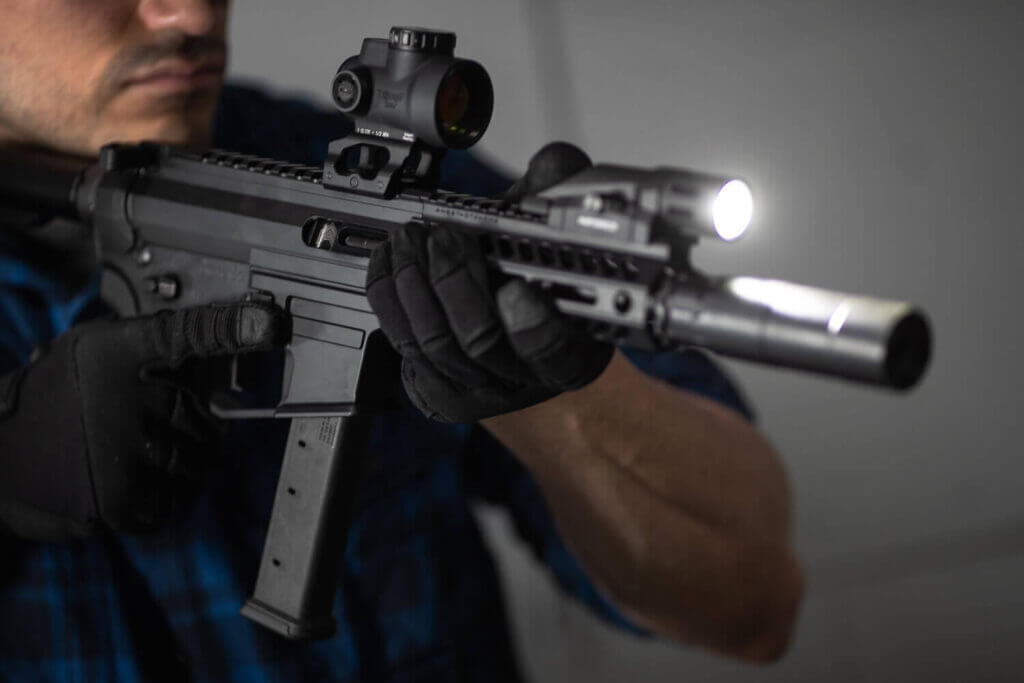
First round pop is the louder first shot from a cold suppressor. Between strings, the suppressor fills with fresh air. On the first shot, hot gas and unburnt powder ignite the oxygen in that air and add a second small blast. Once the oxygen is spent, the next shots settle down.
Everything below covers what causes first round pop, why it comes back, and how we design our suppressors without it.
What is first round pop?
First round pop is the extra report on the first shot through a suppressor that has been sitting idle. Shooters call it FRP. The first shot sounds sharper and louder, then shot two and every shot after it settle into the suppressor’s normal tone.
It isn’t a defect, and it won’t damage anything. It’s a chemistry problem that most suppressor designs live with.
First round pop is the louder first shot from a cold suppressor. After that first shot, the rest of the string returns to the suppressor’s normal sound level.
What causes first round pop?
Oxygen. A suppressor that has been sitting is full of ordinary air, about one-fifth oxygen. When the first round fires, hot propellant gas and unburnt powder rush into the suppressor and meet that oxygen. It burns, and that second ignition adds its own pressure spike on top of the shot.
After that first shot, the suppressor is full of spent combustion gas with little oxygen left to burn. The second ignition has nothing to feed on, so it doesn’t happen.
First round pop is caused by oxygen inside the suppressor igniting on the first shot. Once that oxygen is burned off, the extra blast goes away.
Why does first round pop come back after a break?
Because the air comes back. Let a suppressor sit and it cools, and fresh air works its way back inside. It only takes about 10-15 minutes: set the suppressor down that long and the next shot will likely pop again.
That’s why first round pop shows up more than once a range day. Hang a target, check a group, take a phone call, and the suppressor resets.
Is first round pop worse on a rifle than a .22?
Usually, yes. Two things drive how hard first round pop hits: how much gas and pressure the cartridge puts into the suppressor, and how much oxygen is waiting inside it.
High-pressure centerfire rounds like .223 and 6.5 Creedmoor push more hot gas into the suppressor and ignite more of that oxygen. Low-pressure rounds like .22 LR, 9mm, and subsonic .300 Blackout pop less. Larger suppressors hold more air, so a big rifle suppressor has more oxygen to burn than a small one.
Less isn’t zero. A .22 suppressor can still pop on the first shot, and in a setup this quiet, a louder first shot is easy to hear.
High-pressure centerfire rounds and large suppressors produce the most first round pop. A .22 LR suppressor pops less, but most still pop.
| Factor | Effect on first round pop |
|---|---|
| Suppressor sits 10 to 15 minutes | Pop returns as air refills the suppressor |
| High-pressure centerfire (.223, 6.5 Creedmoor) | More pop |
| Low-pressure rounds (.22 LR, 9mm, subsonic .300 Blackout) | Less pop |
| Larger internal volume | More oxygen to burn, more pop |
| Running wet (low-pressure rounds only) | Less pop |
| Suppressor design | Can eliminate it |
How do you reduce first round pop?
Design is the real fix. Suppressor makers attack it with internal geometry built to control or eliminate that first ignition, and several now market suppressors on low first round pop.
Shooters can also run a suppressor wet: a small amount of water inside displaces some of the air and cools the first burst. It only works with low-pressure rounds, and you repeat it every time the suppressor dries out.
Short of that, the workaround is timing. Fire the first shot at a safe backstop before the shot that matters, and keep strings close enough together that the pop doesn’t come back.
Suppressor design is the only fix that sticks. Running wet and firing a throwaway first shot only work around first round pop.
Do the Reticent 22 and Vanquish 22 have first round pop?
No. On both, the first shot from a cold suppressor is no louder than the second.
The Reticent 22 gets there with its blast chamber and baffles, designed together to eliminate first round pop. It’s 2.5 ounces of Grade 5 titanium, threads onto any 1/2×28 rimfire host, and meters as low as 113.4 dB.
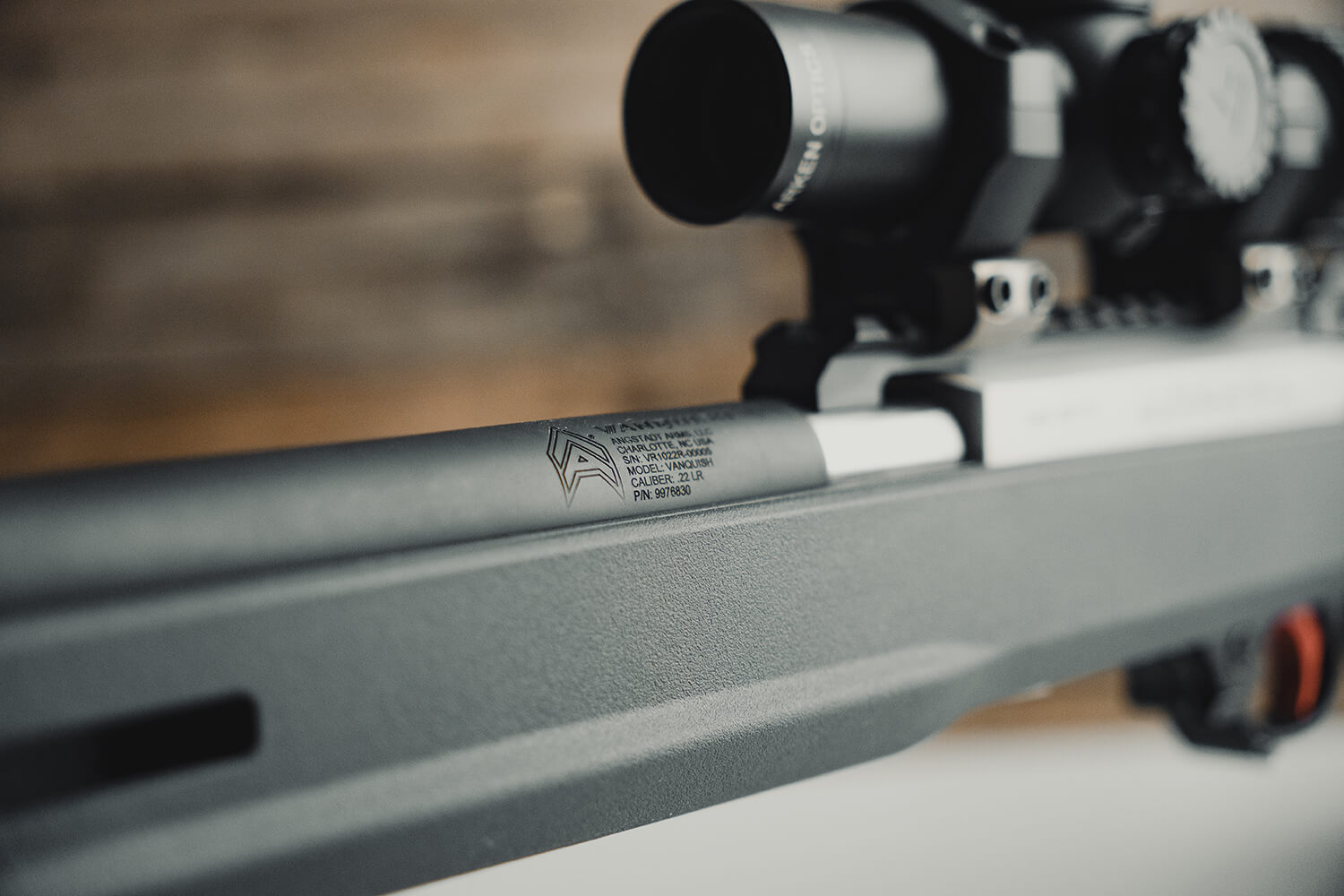
The Vanquish 22 gets there through its ported barrel. Gas bleeds off through the ports along the barrel inside the integral suppressor, and the first shot sounds like the rest. It replaces the factory barrel on a Ruger 10/22, so nothing hangs off the front of the muzzle.
Neither the Reticent 22 nor the Vanquish 22 has first round pop. The first shot from a cold suppressor sounds the same as the second.
A quiet first shot, every time
The Reticent 22 is the lightest full-size .22 suppressor at 2.5 ounces, Grade 5 titanium that threads onto any 1/2×28 rimfire host and meters as low as 113.4 dB, with no first round pop. Want a dedicated quiet 10/22 instead? The Vanquish 22 replaces the factory barrel with an integral suppressor, nothing on the muzzle and no first round pop.
Download the free guide now!
From choosing your first suppressor to taking it home, this guide walks you through everything. Don't be caught off guard, enter your email and we'll send it straight to your inbox!
Featured Products
-
 Reticent 22 Suppressor
Original price was: $375.00.$345.00Current price is: $345.00.
Reticent 22 Suppressor
Original price was: $375.00.$345.00Current price is: $345.00. -
 0940 Lower Receiver for GLOCK®
$279.00
0940 Lower Receiver for GLOCK®
$279.00 -
 0940 Receiver Set for GLOCK®
Original price was: $469.00.$422.00Current price is: $422.00.
0940 Receiver Set for GLOCK®
Original price was: $469.00.$422.00Current price is: $422.00.
Frequently asked questions
First round pop is the louder first shot from a cold suppressor. Oxygen in the air inside the suppressor ignites when the first shot’s hot gas and unburnt powder reach it, adding a second small blast. Once that oxygen burns off, the following shots return to the suppressor’s normal sound level.
No. First round pop is a brief extra ignition of the oxygen inside the suppressor on the first shot. It makes that shot louder, but it is a normal combustion event, not a sign of a problem with the suppressor, the host, or the ammo.
Roughly 10 to 15 minutes, according to Silencer Shop. Once a suppressor sits long enough to cool and refill with fresh air, the oxygen is back, and the next first shot will likely pop again. Shooting strings close together keeps it from resetting.
Most do, though less than centerfire suppressors, because .22 LR runs at lower pressure. Design decides it. The Reticent 22 and Vanquish 22 have no first round pop: the first shot from a cold suppressor is no louder than the second.
Buy a suppressor designed without it. Workarounds like running the suppressor wet or firing a throwaway first shot reduce or hide first round pop, but they have to be repeated. The Reticent 22 and Vanquish 22 are designed so there is nothing to work around.
Latest Intel
First Round Pop: What Causes It and How to Get Rid of It
Oct
ATF’s NFA Open Letter: Do Suppressors Still Need to Be Registered?
Oct
10/22 Takedown Suppressor: The Quiet Build That Packs Small
Oct
Top 7 Suppressor Myths, Debunked
Oct
DOJ Won’t Appeal the NFA Ruling: What It Means for Buyers
Oct
Best Suppressor for the Ruger Mark IV
Oct