


Educational
How to Clean a Sealed .22 Suppressor
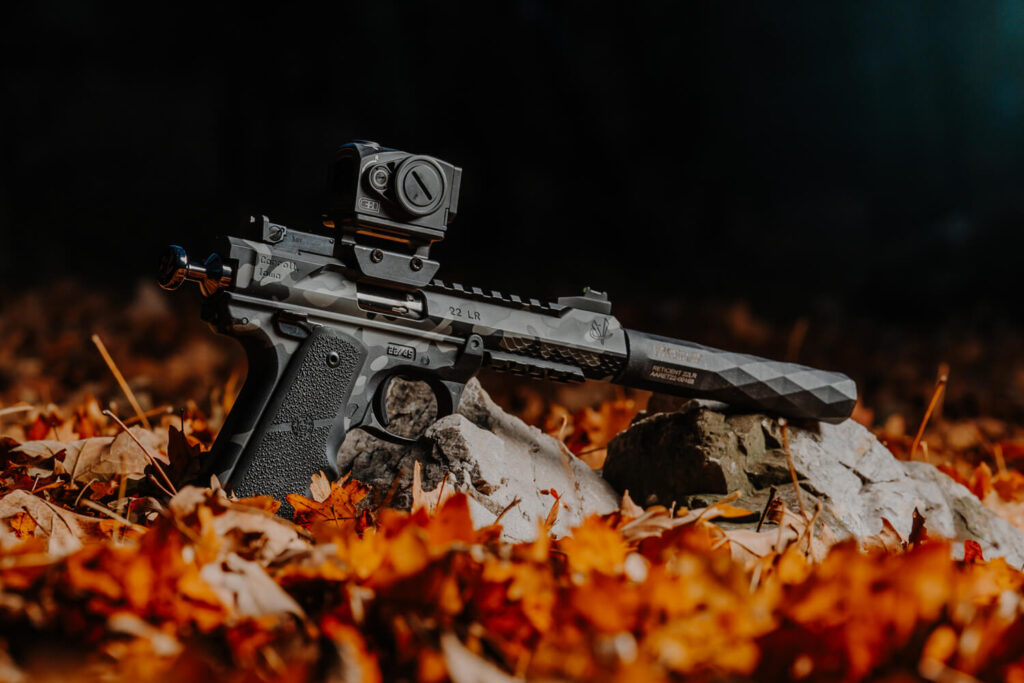
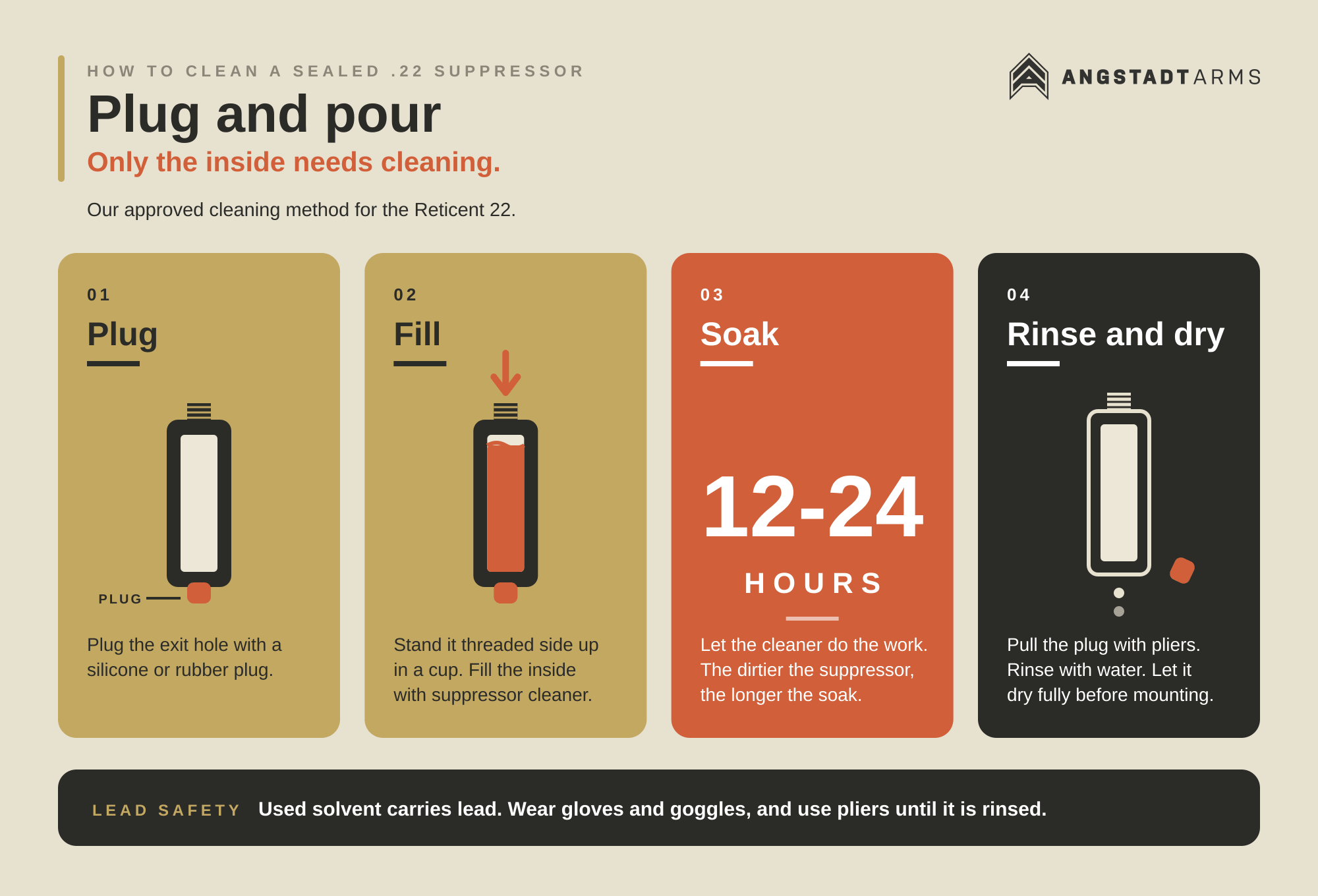
To clean a .22 suppressor like the Reticent 22, plug the exit hole, stand the suppressor threaded side up, and fill it with suppressor cleaner. Let it soak for 12 to 24 hours, then pull the plug, rinse it with water, and let it dry. The suppressor stays fully assembled, and there are no baffles to scrape. This is the exact method we use on our own demo suppressors.
Why does a .22 suppressor need cleaning?
.22LR is one of the dirtiest rounds you can shoot. It fires a soft lead bullet at low pressure, so every shot leaves lead and carbon inside the suppressor, and low pressure does not blow it back out the way a centerfire round does.
That fouling takes up space. As it builds, it reduces the internal volume the gas needs to expand and cool, so a dirty suppressor gets louder over time. Left long enough, it also adds weight and shortens the life of the suppressor.
Lead and carbon build up on every .22LR shot. Cleaning is what keeps a suppressor quiet.
Why is a sealed suppressor easier to clean?
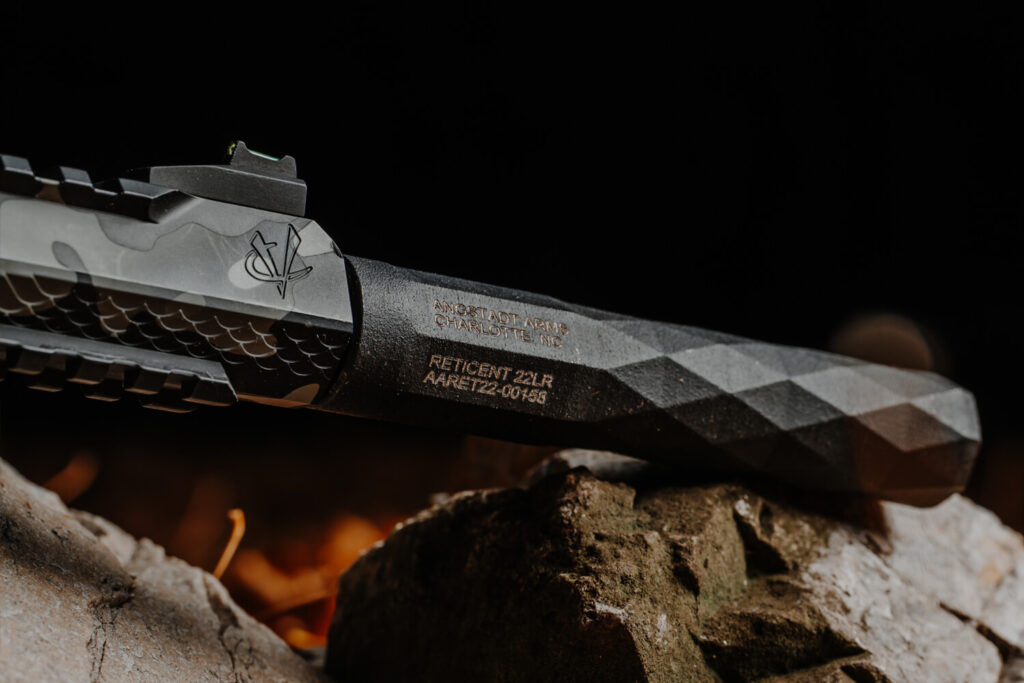
The Reticent 22 is a sealed suppressor, built from Grade 5 titanium by direct metal laser sintering (DMLS), a process that fuses metal powder layer by layer into one enclosed part. There is no user disassembly, so there are no baffles to pull, no stuck stack to fight, and no lead to scrape off by hand.
Scraping is the dirtiest part of cleaning a take-apart suppressor. You are picking lead fouling off parts with your hands and tools. A sealed suppressor skips that step entirely. The solvent breaks the fouling down inside, and the lead leaves in the rinse. Our Reticent 22 review covers the rest of what it is like to own one.
A sealed suppressor never comes apart, so you never scrape lead by hand. The solvent does the work.
How do you clean the Reticent 22 step by step?
Before you start, let the suppressor cool completely, confirm the firearm is unloaded, and remove the Reticent 22 from the barrel. We use Breakthrough Clean Technologies Suppressor Cleaner, and in our internal testing it cleaned as well as an ultrasonic cleaner.
- Plug the exit hole with a silicone or rubber plug. We use these silicone plugs.
- Stand the suppressor on end, threaded side up, in a cup or small bin to catch any spills.
- Fill the inside of the suppressor completely with suppressor cleaner.
- Let it soak for 12 to 24 hours. The dirtier the suppressor, the longer the soak.
- Using pliers, remove the plug, pour the used solvent into a container, and rinse the suppressor thoroughly with water.
- Let the Reticent 22 dry completely before you mount it again.
The full instructions are also on our Reticent resources page.
Plug, fill, soak 12 to 24 hours, rinse, and dry. The Reticent 22 never comes apart.
Why plug the exit hole instead of using a soak tube?
The Breakthrough Clean Technologies Suppressor Cleaning Kit comes with a soak tube, and its instructions have you fill the tube with solution and submerge the entire suppressor. Many owners follow those instructions. It works, but it uses a lot more solution than the job needs.
The fouling is on the inside. The outside of the Reticent 22 is Cerakote, and it does not need a solvent bath. Our manual recommends keeping harsh solvents off external surfaces anyway. Plug the exit hole and pour the cleaner straight into the suppressor instead.
The Reticent 22 measures 1″ by 5″, so even its full outside dimensions hold only about 2 ounces of liquid, and the inside holds less. The kit soak tube is sized for suppressors up to 2.375″ in diameter and 8.5″ long. Pouring into the suppressor makes a 16 ounce bottle of cleaner last many more cleanings.
Only the inside needs cleaning. Plug the exit hole, pour, and a bottle of cleaner goes much further.
| Method | Plug and pour (our method) | Soak tube | Ultrasonic cleaner |
|---|---|---|---|
| How it works | Solvent fills the inside of the suppressor only | The whole suppressor sits submerged in a tube of solvent | The whole suppressor runs in a tank of cleaning solution |
| Time | 12 to 24 hour soak | Per the kit instructions | About 30 minutes |
| Solvent used | Only what fills the suppressor, about 2 ounces or less | Enough to cover the entire suppressor | Enough to fill the tank |
| Cleans the outside | No, and it does not need to | Yes | Yes |
| What you need | A silicone or rubber plug and a cup | A soak tube (included in the Breakthrough kit) | An ultrasonic cleaner |
Does an ultrasonic cleaner work on a .22 suppressor?
Yes. Place the entire Reticent 22 in an ultrasonic cleaner with a firearms cleaning solution and run a cycle of about 30 minutes, then let it dry completely. The suppressor stays fully assembled for this method too.
If you already own an ultrasonic cleaner, it is the fastest option. If you do not, there is no need to buy one. In our internal testing, the plug-and-pour soak cleaned the Reticent 22 just as well.
An ultrasonic cleaner works in about 30 minutes. The soak works just as well with less equipment.
How often should you clean a .22 suppressor?
Clean the Reticent 22 every 500 to 1,000 rounds with moderate use, and every 300 to 500 rounds with heavy use or dirty ammunition. Clean on schedule, before the lead has thousands of rounds to pack in.
Ammo choice moves the interval. Dirtier ammo means cleaning sooner, which is one more reason to pick a clean-running load from our subsonic and standard velocity ammo guide. Kept clean, a .22 suppressor lasts. Our demo Reticent 22 was past 10,000 rounds as of September 2026 and still performing.
Clean every 500 to 1,000 rounds, or every 300 to 500 with heavy use or dirty ammo.
How do you clean a suppressor safely?
The used solvent is the hazard. After a soak, it is full of lead, which is very dangerous, so do not handle it or let it touch bare skin.
Wear gloves and safety goggles, and handle the suppressor with pliers until it has been rinsed with fresh water. After the rinse, it is safe to handle again. Work in a ventilated space, keep the used solvent from spilling, and wash your hands when you finish. Dispose of the used solvent as hazardous waste, not down the drain.
Used solvent carries lead. Gloves, goggles, pliers, and a fresh-water rinse before you touch the suppressor.
What should you avoid when cleaning a sealed suppressor?
Do not try to take a sealed suppressor apart. The Reticent 22 is built as one enclosed part.
Keep harsh abrasives and harsh solvents off the outside, since they can damage the finish. Let the suppressor dry completely before you put it back on the gun.
Before you mount the Reticent 22 again, confirm the plug is out and the bore is clear. Never fire through an obstructed suppressor. Then thread it on by hand until it seats fully against the barrel shoulder.
Never open it, never scrub the finish, and confirm the plug is out before you shoot.
Which cleaning method should you use?
Use plug and pour. It cleans as well as an ultrasonic cleaner in our testing, it needs only a plug and a bottle of suppressor cleaner, and it uses a fraction of the solvent a soak tube does. If you already own an ultrasonic cleaner, a 30 minute cycle gets the same result faster.
Want a .22 suppressor where cleaning is a soak, not a scrub? The Reticent 22 is the quietest and lightest full-size .22LR suppressor: 2.5 ounces of sealed Grade 5 titanium with no baffles to pull and no lead to scrape.
Featured Products
-
 Reticent 22 Suppressor
Original price was: $375.00.$345.00Current price is: $345.00.

Download the free guide now!
From choosing your first suppressor to taking it home, this guide walks you through everything. Don't be caught off guard, enter your email and we'll send it straight to your inbox!
Frequently asked questions
Plug the exit hole, stand the suppressor threaded side up, and fill it with suppressor cleaner. Let it soak for 12 to 24 hours, then remove the plug, rinse it with water, and let it dry. A sealed suppressor like the Reticent 22 stays fully assembled, so there are no baffles to scrape.
Soak the Reticent 22 for 12 to 24 hours with the exit hole plugged and the inside completely full of suppressor cleaner. Then rinse it thoroughly with water and let it dry completely. In our internal testing, this soak cleaned as well as a 30 minute cycle in an ultrasonic cleaner.
Yes. Place the entire Reticent 22 in an ultrasonic cleaner with a firearms cleaning solution and run a cycle of about 30 minutes, then let it dry completely. The suppressor stays assembled. If you do not own an ultrasonic cleaner, a plug-and-pour soak works just as well.
Clean the Reticent 22 every 500 to 1,000 rounds with moderate use, and every 300 to 500 rounds with heavy use or dirty ammunition. .22LR leaves lead and carbon inside the suppressor on every shot, and that buildup makes a suppressor louder over time.
Yes. After a soak, the solvent carries lead from the fouling inside the suppressor. Wear gloves and safety goggles, handle the suppressor with pliers until it is rinsed with fresh water, keep the solvent off bare skin, work in a ventilated space, and wash your hands when you finish.
Latest Intel
How to Clean a Sealed .22 Suppressor
Nov
Ruger 10/22 & Mark IV Suppressor Alignment
Nov
Do 22LR Suppressors Reduce Recoil and Improve Accuracy?
Nov
What’s the Best Suppressor for the CZ 457?
Nov
Can You Travel or Hunt Out of State with a Suppressor?
Nov
Direct Thread vs QD for a Rimfire Suppressor
Oct