


Guides
How to Choose a .22LR Suppressor in 2026 | Buyer’s Guide

A .22 suppressor is the cheapest, most useful upgrade most rimfire owners will ever make. Now that the transfer tax is gone, more people are buying their first can this year than in any year before it. The hard part is no longer the paperwork or the cost. It is picking the right one.
Ignore the marketing superlatives. A good buying decision comes down to five things.
The five things that actually matter
- Sound. How quiet a can is, and how it sounds. Raw decibel numbers matter, but so does tone. A can that is quiet on paper can still be harsh at the ear. First round pop, the louder first shot, is worth asking about.
- Weight. On a light rimfire rifle, weight at the muzzle is the thing you feel every time you shoulder it. A few ounces changes the balance of the whole gun.
- Mounting. Standalone cans thread onto the muzzle, almost always 1/2×28 on a .22. An integral suppressor is built into the barrel itself. One moves between guns. The other disappears into one.
- Host gun fit. A 10/22, a Precision Rimfire, and a pistol all might warrant slightly different setups. Match the can to how the gun is used, not the other way around.
- Materials and service. Titanium runs lighter, stainless and aluminum run cheaper. Rimfire is dirty, so ask how easy the the can is to clean and what the warranty covers.
Two ways to make a .22 quiet
Most buyers do not realize there are two real paths, and they solve different problems.
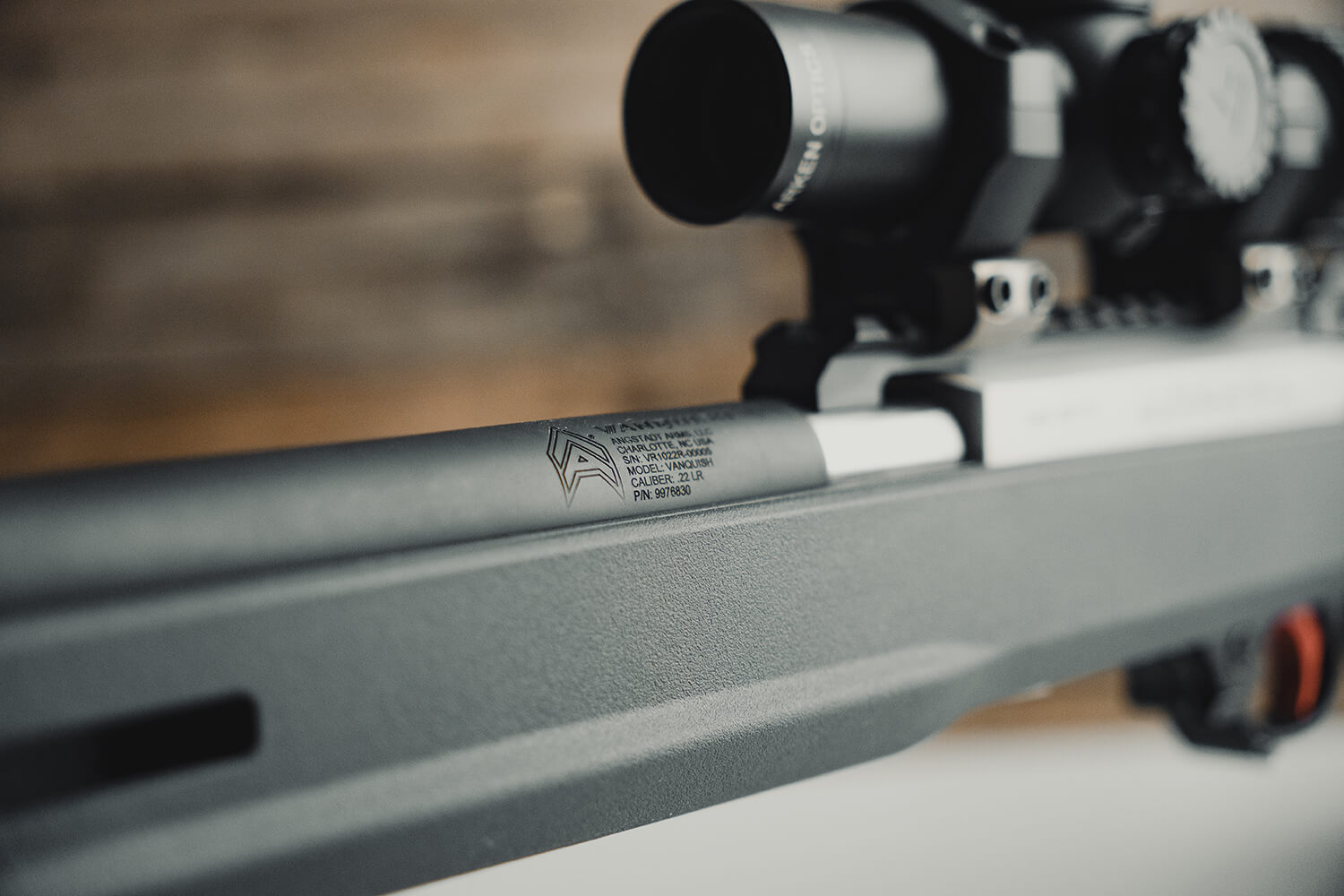
The integral path. An integrally suppressed barrel replaces the factory barrel and puts the suppression inside the profile. The Vanquish 22 does this for the 10/22 and AR-22 with zero baffles and a Bentz match chamber, so there is no suppressor hanging off the muzzle, no first round pop and you’re gaining a match grade barrel. It drops into the rifle you already own.
The standalone path. A traditional suppressor threads on and can move from gun to gun. The Reticent 22 is 2.5 ounces of Grade 5 titanium, so it goes full size quiet without turning your rifle into a nose-heavy club, and it swaps between every 22LR you own.
How to think about price now that the stamp is $0
With the transfer tax eliminated, the math changed. The cost of going suppressed is now the suppressor itself, not the can plus a government fee. That makes the entry point lower than it has ever been, and it makes a second can an easier decision than it used to be. Buy for the setup you actually shoot, not the one you might build someday.
Match the suppressor to how & what you shoot
- One dedicated quiet 10/22: the integral Vanquish 22. Nothing to add, nothing to remove.
- One can across several rimfires: the standalone Reticent 22, moved between hosts
- Pack and trail guns where every ounce counts: the lightest can wins, and 2.5 ounces is hard to beat, but a Vanquish 22 replaces your factory barrel with a lighter alternative so this one’s a draw!
Featured Products
-
 Vanquish 22 Suppressed Ruger 10/22 Barrel
Original price was: $599.00.$535.00Current price is: $535.00.
Vanquish 22 Suppressed Ruger 10/22 Barrel
Original price was: $599.00.$535.00Current price is: $535.00. -
 Reticent 22 Suppressor
Original price was: $375.00.$345.00Current price is: $345.00.
Reticent 22 Suppressor
Original price was: $375.00.$345.00Current price is: $345.00.
Latest Intel
Suppressed Fest 2026: This Weekend!
Oct
How to Sell or Transfer a Suppressor in 2026
Oct
First Round Pop: What Causes It and How to Get Rid of It
Oct
ATF’s NFA Open Letter: Do Suppressors Still Need to Be Registered?
Oct
10/22 Takedown Suppressor: The Quiet Build That Packs Small
Oct
Top 7 Suppressor Myths, Debunked
Oct