


Educational
ATF’s NFA Open Letter: Do Suppressors Still Need to Be Registered?
As of October 9, 2026, ATF no longer enforces NFA registration, Form 4 approval, or tax stamps for suppressors. The policy covers every buyer and every dealer nationwide, not only Silencer Shop customers. You still buy from a licensed dealer and pass a NICS background check, and your state’s law still decides whether you can skip registration.
ATF Director Robert Cekada signed the Open Letter the same day. Here’s what changed, what didn’t, and the one decision you can’t undo.
What did ATF’s Open Letter change?
ATF stopped enforcing the NFA’s approval, registration, and tax stamp requirements for suppressors, short-barreled rifles, short-barreled shotguns, and any other weapons (AOWs). The policy took effect October 9, 2026, the day ATF published the Open Letter and a set of FAQs.
It follows the Justice Department’s decision not to appeal Silencer Shop Foundation v. ATF. That August 5 judgment protected only the plaintiffs and their members and customers. Attorney General Todd Blanche chose to extend the same treatment to everyone, using the department’s enforcement discretion. We covered that decision in DOJ won’t appeal the NFA ruling.
For a suppressor, that means no ATF approval before a transfer, no entry in the National Firearms Registration and Transfer Record (NFRTR, ATF’s federal NFA registry), and no federal ban on moving an unregistered suppressor across state lines.
ATF stopped enforcing NFA registration and approval for suppressors on October 9, 2026, for every buyer and every dealer, not only covered customers.
What still applies when you buy a suppressor?
The background check stays. A suppressor is still a firearm under the Gun Control Act, so your dealer completes a Form 4473 and runs a NICS check, the same as for any rifle. Dealers still sell only to residents of their own state unless an exception applies.
Fully automatic firearms and destructive devices didn’t change. Both keep the full NFA process.
Short-barreled rifles and shotguns still need a Form 20 before you take one across state lines, registered or not. Suppressors don’t. That rule comes from a separate federal law the Open Letter leaves in place.
State and local law stays in force too. ATF’s guidance doesn’t override a state that bans suppressors or requires NFA registration, and a dealer can’t transfer a suppressor in violation of state law.
You still pass a NICS background check, state law still applies, and fully automatic firearms keep the full NFA process.
Should you still register your suppressor?
Skip it if your state and your dealer allow it. Registration is now voluntary. ATF still runs the NFRTR and still approves NFA forms for anyone who wants to register, but in a free state, federal law no longer makes you.
Two things decide your path: your state and your dealer.
| Your situation | Your path |
|---|---|
| Free state, dealer has dropped the NFA process | Form 4473 and a NICS background check. Take it home the same day. |
| Free state, dealer still running the NFA process | Voluntary Form 4 at $0, approval, then pickup. Or find a dealer offering the 4473 path. |
| NFA state (15 states) | Form 4 at $0, approval, then pickup. State law still requires registration. |
| Banned state (8 states plus Washington DC) | You cannot legally own a suppressor. |
Each dealer picks which process to run, and some will keep filing NFA paperwork while the industry adjusts. Call yours before you count on walking out with a suppressor.
State law still decides whether you can own a suppressor at all. Check where your state lands on our suppressor legal states map, and our Silencer Shop ruling explainer covers how the court case got us here.
Registration is voluntary now. In a free state, skip it if your dealer offers the 4473 path. In an NFA state, state law still requires it.
What are the risks of skipping NFA registration?
Skipping registration is the faster path, and ATF’s own FAQ spells out three tradeoffs.
Removing a registered suppressor is permanent. If you already own a registered suppressor, you can ask ATF to take it off the registry. ATF says it can’t be re-registered later unless the Attorney General declares an amnesty. Leave it registered unless you’re sure.
Moving can change your status. ATF says it can’t tell you whether a state treats an unregistered suppressor as lawfully held. If you might move to an NFA state, a voluntary registration at $0 keeps that door open.
The policy can be reversed. ATF says enforcement could resume if Congress restores the tax, a court reverses the injunction, or the policy is rescinded. Federal law generally doesn’t allow registering an NFA item after the fact, outside an amnesty.
Skip registration if your state and dealer allow it. Keep an existing registration, and register voluntarily if you might move to an NFA state.
Whichever path you take, start with the right suppressor
The Reticent 22 is the lightest and quietest full-size 22LR suppressor and a great first suppressor for any 1/2×28 rimfire host. The Vanquish 22 is an integrally suppressed Ruger 10/22 barrel that installs in 5 minutes and upgrades both accuracy and sound. Ask your dealer which path they run, then take yours home.
Featured Products
-
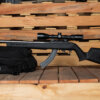 Vanquish 22 Suppressed Ruger 10/22 Barrel
Original price was: $599.00.$535.00Current price is: $535.00.
Vanquish 22 Suppressed Ruger 10/22 Barrel
Original price was: $599.00.$535.00Current price is: $535.00. -
 Reticent 360S Suppressor
Original price was: $895.00.$795.00Current price is: $795.00.
Reticent 360S Suppressor
Original price was: $895.00.$795.00Current price is: $795.00. -
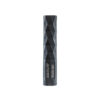 Reticent 22 Suppressor
Original price was: $375.00.$345.00Current price is: $345.00.
Reticent 22 Suppressor
Original price was: $375.00.$345.00Current price is: $345.00.
Download the free guide now!
From choosing your first suppressor to taking it home, this guide walks you through everything. Don't be caught off guard, enter your email and we'll send it straight to your inbox!
Frequently asked questions
Not under federal enforcement. As of October 9, 2026, ATF no longer enforces NFA registration or approval for suppressors, for any buyer. Registration is voluntary. Your state can still require it, and 15 states do, so check your state law and ask your dealer which process they run.
Yes. A suppressor is still a firearm under the Gun Control Act. Your dealer completes a Form 4473 and runs a NICS background check, the same as for a rifle. ATF’s Open Letter removed NFA registration and approval. It did not remove the background check.
Under federal law, yes. ATF says it will not enforce the NFA ban on moving an unregistered suppressor across state lines. Short-barreled rifles and shotguns still need a Form 20. Your destination state’s law still applies, so check it before you travel with a suppressor.
Yes, by asking ATF’s NFA Division, but it is permanent. ATF says an item removed from the registry cannot be re-registered unless the Attorney General declares an amnesty. If you might move to a state that requires NFA registration, keep your existing registration in place.
Yes. ATF says enforcement could resume if Congress restores the tax, a court reverses the injunction, or the policy is rescinded. Federal law generally does not allow registering an NFA item after the fact, outside an amnesty. Weigh that before you skip registration.
Latest Intel
ATF’s NFA Open Letter: Do Suppressors Still Need to Be Registered?
Oct
10/22 Takedown Suppressor: The Quiet Build That Packs Small
Oct
Top 7 Suppressor Myths, Debunked
Oct
DOJ Won’t Appeal the NFA Ruling: What It Means for Buyers
Oct
Best Suppressor for the Ruger Mark IV
Oct
How Long Does a Rimfire Suppressor Last?
2 Comments
Sep